
Vetting Your Wealth Manager in Dubai for Smart Property Decisions

Dubai’s real estate market is a very exciting place, especially for people looking to invest from other countries. It offers many chances to grow your money. But, investing in a different country can be tricky. It’s not just about finding a nice building. You need to understand local rules, how the market works, and how to keep your money safe. This is why having the right partner to help you manage your money is super important.

International investors in Dubai often face special challenges. For example, understanding all the legal documents can be hard when they are written in a different language or follow different rules than what you are used to. You also need to know which areas in Dubai are growing fastest and will give you the best returns. Plus, making sure your investment is safe from risks is a big deal. For Australians in Dubai, getting regulated financial advice is key to avoiding problems, for example. You can learn more about finding regulated financial advice for Aussies in Dubai.
This is where a specialized wealth management partner comes in. Firms like harbourfront wealth management know all about the Dubai property market. They can help you find the best properties, set up your investments in a smart way, and protect your money over time. Think of them as your expert guide, making sure you make good choices. They help you get through all the tricky parts, from figuring out the best places to buy to making sure your investment fits your bigger money goals. This kind of expert help is much needed when you are dealing with big investments. To truly succeed, you often need a guide, and you can learn more about why you need a top investment advisor firm in Dubai for 2026.
Are you buying, selling, renting, or investing in Dubai? Connect with Ayaz Salman for a FREE Dubai Real Estate Consultation.
What to expect from a specialised Dubai-focused wealth manager
When you choose a specialized partner like harbourfront wealth management, you are not just getting advice. You are getting a full team that knows the Dubai property market inside and out. These experts help you make smart choices for your money. They offer many services to make sure your investment journey is smooth and successful.
Core Services from Your Wealth Manager
A good wealth manager in Dubai will help you with several key things:
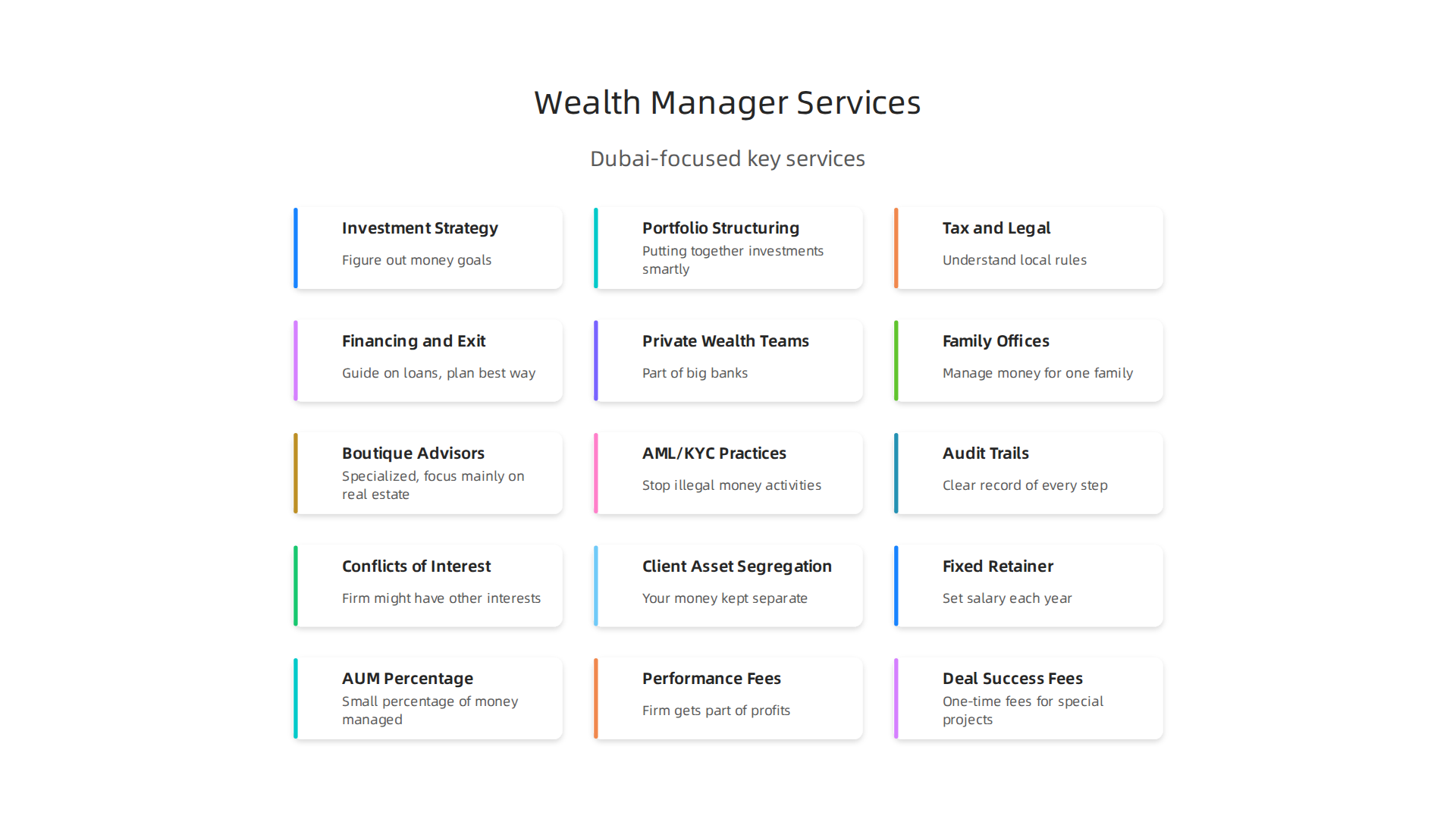
- Investment Strategy: They help you figure out what your money goals are and how to reach them in Dubai’s market. This means picking the right types of properties and areas to invest in. They look at things like how much money you can expect to earn from rent and how much your property might grow in value.
- Portfolio Structuring: This is about putting together your investments in a smart way. Think of it like building a balanced meal, but with your money. They make sure you have different kinds of properties or investments so you don’t put all your eggs in one basket.
- Tax and Legal Help: Laws and taxes can be different in every country. In Dubai, a good wealth manager helps you understand the local rules. They make sure your investments are set up in a way that follows the law and is good for your taxes. This also includes how firms like theirs get regulated, for example, needing a DIFC Category 4 License: Investment Advisory Guide to offer advice in certain free zones.

- Financing and Exit Planning: They can guide you on how to get loans for your properties if you need them. And when it is time to sell, they help you plan the best way to do it to get the most money back.
Special Value for Property Investors
For people looking to invest in Dubai real estate, a specialized wealth manager offers extra benefits:
- Local Market Knowledge: They know what’s happening in Dubai right now. They can tell you which areas are growing fast and where new projects are coming up. This kind of local insight is super helpful. For example, they can share insights on Property Price Forecasts Dubai (2026), helping you make informed decisions.
- Developer Relationships: These firms often have strong connections with big property builders. This means they might get early access to new projects or even special deals that others don’t know about.
- Off-Market Opportunities: Sometimes, the best deals aren’t advertised widely. A specialized manager can find these "off-market" properties for you. This gives you a better chance to invest in something unique and profitable.
Different Kinds of Wealth Managers
It’s helpful to know that not all wealth managers are the same.

- Private Wealth Teams: These are often part of big banks like
ubs wealth managementorwealth and investment management barclays. They offer a wide range of services for many types of investments, not just real estate. They are usually for very wealthy people. - Family Offices: These are teams that manage money for just one very rich family. They handle everything from investments to daily finances, giving very personal service.
- Boutique Real Estate-Focused Advisors: This is where firms like
harbourfront wealth managementfit in. They are smaller, more specialized teams that focus mainly on real estate investments in specific places like Dubai. They have deep knowledge of property markets and can offer more hands-on help for real estate investors compared to larger, general wealth managers like those atbernstein private wealth management. They are experts in finding the best real estate deals and strategies for you.
Understanding these differences helps you pick the right partner for your Dubai property goals. To explore the landscape of expert advisors in the region, you can learn more about Dubai Investment Management Firms 2026: Top Companies and Expert Strategies for Real Estate.
Now that you know the different kinds of wealth managers out there, it is super important to pick the right one for your needs. This is especially true if you are looking for a specialized partner, much like a harbourfront wealth management firm, to help with your Dubai property goals. Not all firms are the same, and knowing how to check them out is key. Let’s look at a checklist to help you evaluate potential partners.
How to Evaluate a Firm Using a Harbourfront-Style Checklist
When you are thinking about trusting a firm with your money, especially in a fast-moving market like Dubai, you need to do your homework.

This means looking closely at how they operate and what they have done for others.
Checking Their Legitimacy and Licenses
The first thing to look for is if the firm is properly allowed to give financial advice. This is called their "regulatory standing." It means they follow the rules set by the government bodies that oversee money matters.
- Why it matters: A licensed firm is held to certain standards. This protects you, the investor. If a firm does not have the right licenses, it could be a warning sign.
- What to ask: Ask about their licenses and who regulates them in Dubai. For instance, many firms giving financial advice in Dubai need to be licensed by specific authorities, which helps ensure they provide regulated financial advice. You want to know they are truly allowed to handle your investments in that area.
Their Track Record and Who They Help
Next, you want to see what the firm has done in the past and for whom. Think of it like looking at a builder’s past projects.
- Experience in Dubai Real Estate: Does the firm have a lot of experience specifically with Dubai properties? A specialized firm like
harbourfront wealth managementwould focus on this. Larger firms likeubs wealth managementorwealth and investment management barclaysmight deal with many types of investments all over the world, which is fine, but you want someone who really knows Dubai. - Client Profiles: Who are their typical clients? Do they work with people like you? For example, if you are looking at firms like
bernstein private wealth management, they often cater to very high-net-worth individuals. Make sure the firm’s usual client fits your situation. - Asking for Proof: When you talk to a firm, do not be shy to ask about their past successes. You want to know how they help clients meet their investment goals. Looking at a firm’s process for advising clients is a great way to choose a trusted manager.
Documented Investment Outcomes
It is good to ask about actual results. What kind of returns have their clients seen?
- Realistic Expectations: A good firm will talk about past performance but also make sure you understand that future results can be different. They should not promise quick riches. Instead, they should show how their strategies have worked over time.
- What to ask for: You can ask for examples of investment plans and how those plans played out for other clients with similar goals to yours. This helps you understand their real-world impact. While they cannot share private client details, they can often give examples of strategies and typical outcomes. This helps you see if they are the right choice. It is smart to learn more about why you need a top investment advisor firm in Dubai for 2026.
Choosing the right wealth manager is a big decision. By looking at their regulatory standing and their history of helping clients, you can find a partner that truly understands your needs for Dubai property investments.
If you are buying, selling, renting, or investing in Dubai, connect with Ayaz Salman for a FREE Dubai Real Estate Consultation.
After you have checked a firm’s background and what they have done, the next big step is to understand exactly what services they offer. You want to know what they will do for you and how they will present their plans. This helps you compare different firms like a specialized harbourfront wealth management firm against larger ones such as ubs wealth management or wealth and investment management barclays.
Key services and deliverables to request (and how to compare proposals)
When you look at different wealth managers, it is important to ask about their specific services. You should also know how to read their proposals.

This way, you can see who truly offers what you need for your Dubai property investments.
Detailed Service Scopes: What to Expect
A good wealth manager should offer more than just general advice. Here are some key services to look for:
- Feasibility Studies: This is like a deep dive into an investment idea. They will research if a property idea in Dubai is actually good. They look at things like how much it costs, what it could earn, and if it makes sense for you. This helps you understand the pros and cons before you put money down.
- Cash-Flow Modeling: This service helps you see the money coming in and going out from your property. It shows you how much income you might get from rent and how much you will pay for upkeep. This helps you plan your money better over time.
- Financing Arrangements and Tax Planning: Wealth managers can help you find the best ways to pay for your property, like getting loans. They can also help with understanding taxes. This is very important because rules about money and taxes can be tricky, especially when investing in a foreign market like Dubai. Dealing with taxes for your investments is a crucial part of wealth management in 2026.
- Property Management Support: Some firms, especially those focused on real estate like a
harbourfront wealth managementtype, might help you manage your property once you own it. This could mean finding renters, collecting rent, and taking care of repairs.
Some firms, like bernstein private wealth management, might focus on very rich clients and offer a wide range of services beyond just real estate. But for Dubai property, you want a firm that really knows the local market inside and out. To pick the right firm, you need to understand their process, transparency, and how they will be accountable to you, especially in 2026 with new market trends affecting real estate investment strategies Emerging Trends in Real Estate® 2026 – PwC.
How to Read a Proposal: Looking Beyond the Words
Once you get a proposal from a firm, it is like a roadmap. You need to know what to look for to make sure it is a good fit.
- Key Performance Indicators (KPIs): These are ways to measure if the firm is doing a good job. Ask them how they will show you that your investments are growing. For example, they might show you how much your property value has gone up or how much rental income you are getting.
- Deliverables: This means the actual things the firm will give you. It could be regular reports, updated plans, or meetings to discuss your progress. Make sure you know what you will actually receive.
- Timelines: When will certain things happen? Will they give you a plan within a month? Will they update you every three months? Clear timelines help you know what to expect and when.
- Escalation Paths: What happens if something goes wrong or you are not happy? A good proposal will tell you who to talk to and how problems will be fixed. This shows they are ready to help if issues come up.
Looking closely at these details helps you choose a wealth manager that is transparent and truly aligned with your goals. If you want to dive deeper into the market, you can explore more about Dubai real estate investment 2026 proven strategies and market data for buyers. Understanding these parts of a proposal is key to making a smart choice for your money.
Now that you know what services to expect and how to read a proposal, it is time to dig even deeper. You need to make sure the firm you choose is not just good on paper, but also trustworthy in how they work. This is called "due diligence." It helps you spot any warning signs, also known as "red flags." This is important whether you are looking at a specialized firm like a harbourfront wealth management partner or a bigger one like ubs wealth management.
Due diligence checklist and practical red flags when vetting Harbourfront-style partners
Checking a wealth manager thoroughly is key, especially for big investments like property in Dubai. Here’s a simple checklist and what to watch out for.
Operational and Compliance Checks: Making Sure They Play by the Rules
These checks are about how the firm runs its business and follows important laws.
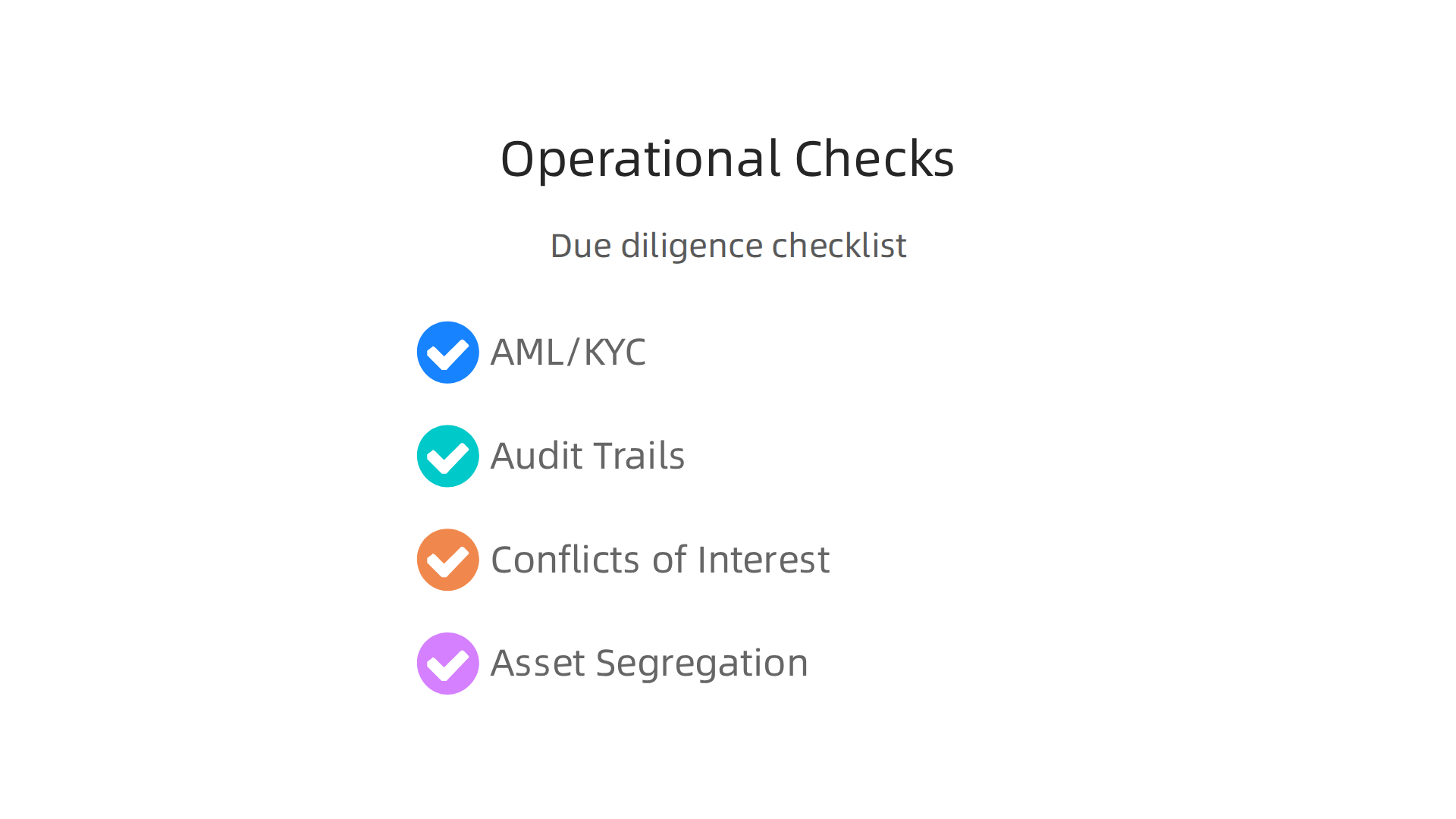
- AML/KYC Practices: AML means "Anti-Money Laundering" and KYC means "Know Your Customer." These are very important rules that financial firms must follow to stop illegal money activities. By 2026, investment advisers have new and stricter rules for this. A good firm will ask you for clear identification and information about where your money comes from. They should also explain their process. If they do not ask enough questions, that is a red flag. It could mean they are not following the law, which puts your money at risk AML Compliance for Investment Advisers: Essential Steps to Meet the 2026 Deadline.
- Audit Trails: An audit trail is like a clear record of every step the firm takes with your money and investments. You should be able to see who did what, when, and why. This shows that they are organized and open about their work. Ask them how they keep these records and how you can access them.
- Conflicts of Interest: Sometimes, a firm or its staff might have other interests that could affect their advice to you. For example, they might earn more money by selling you a certain property. A good firm will tell you about any possible conflicts of interest up front. They should show you how they keep your best interests first.
- Client Asset Segregation: This means your money and investments should be kept completely separate from the firm’s own money. This is very important. If the firm runs into financial trouble, your assets should be safe. Make sure they clearly explain how they separate your funds.
These checks help you know that a firm, whether it’s a bernstein private wealth management type or a firm like wealth and investment management barclays, operates cleanly and legally. If they seem to hide any of these details, be careful. For more insights on finding top firms, explore our guide on Dubai investment management firms 2026 top companies and expert strategies for real estate.
Commercial Red Flags: Signs of Trouble
Beyond how they run their business, there are other signs that a wealth manager might not be the right choice.
- Inadequate References: If a firm cannot or will not give you solid references from other clients, that is a big warning sign. Good firms are proud of their happy clients. Always ask for references and take the time to check them.
- Opaque Fees: "Opaque" means unclear. If a firm’s fees are hard to understand or they keep changing, that is a problem. You need to know exactly what you are paying for and how much. Ask for a full breakdown of all costs. Hidden fees can eat into your profits.
- Unrealistic Return Promises: If a firm promises that your investments will make a lot of money very quickly with no risk, be very cautious. Investing always has some risk, and no one can guarantee huge returns. If it sounds too good to be true, it probably is.
- Poor Documentation: After meetings or important talks, a good firm will give you clear written documents. This could be summaries of your discussions, plans, or agreements. If their paperwork is messy, incomplete, or hard to get, this shows a lack of professionalism and could lead to problems later.
By keeping an eye out for these red flags, you can protect your investments and choose a wealth manager that truly works for you. It’s about being smart and asking the right questions.
Buying, selling, renting, or investing in Dubai? Connect with Ayaz Salman for a FREE Dubai Real Estate Consultation.
After checking for red flags, the next big step is to understand how a wealth manager charges for their services. It is super important to know all about their fees and how they make sure their goals match yours. This is true whether you are working with a harbourfront wealth management partner or a larger firm like ubs wealth management.
Cost structures, fee negotiation and aligning incentives
Knowing how a wealth manager charges helps you make smart choices. Let’s look at the common ways they charge and how you can make sure they work hard for you.
Common fee models: fixed retainer, AUM percentage, performance fees and deal success fees
Wealth managers use different ways to charge. Here are the main ones:
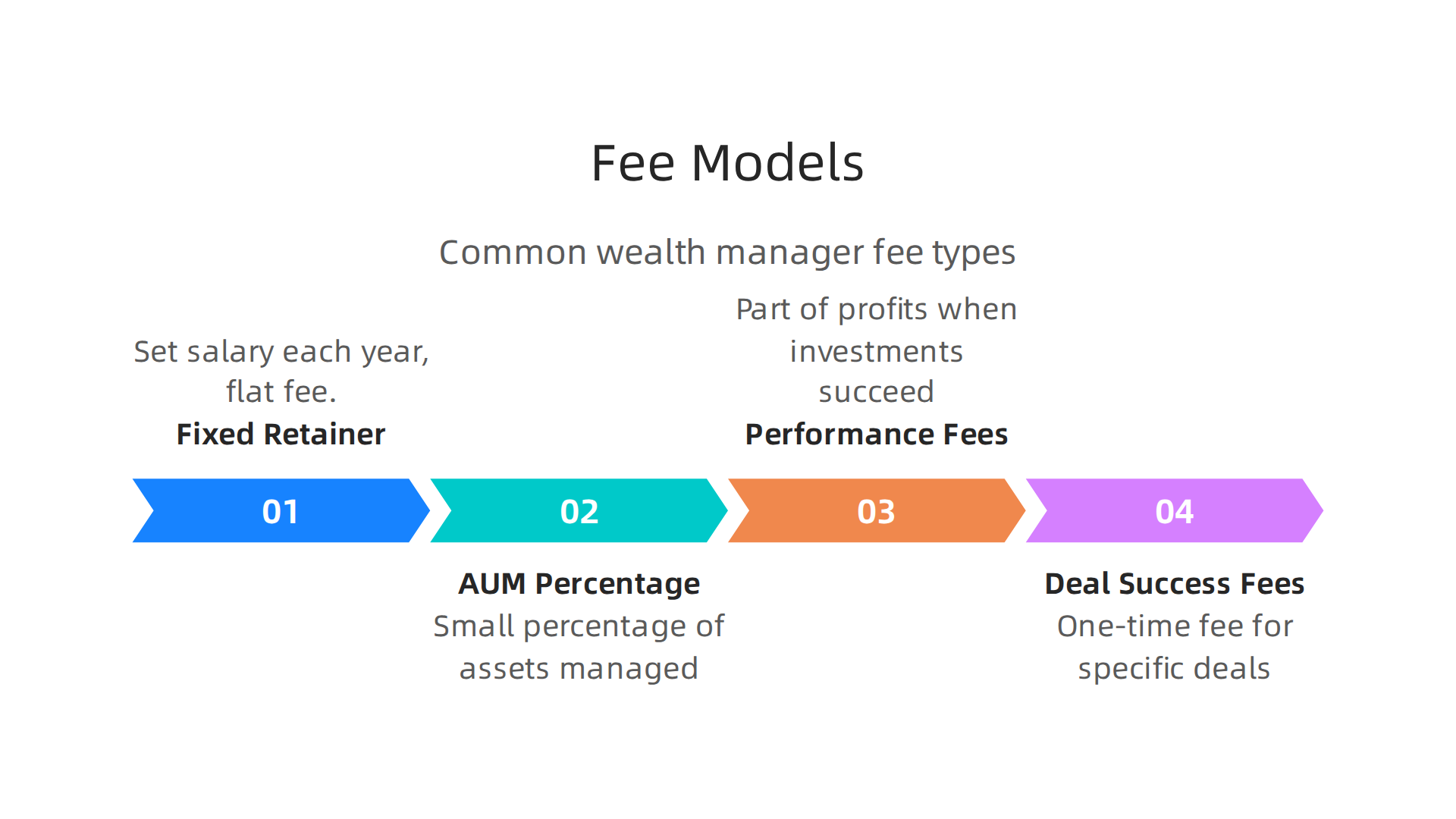
- Fixed Retainer: This is like paying a set salary each year, no matter how much money you have with them. It is a simple, flat fee.
- AUM Percentage: AUM stands for "Assets Under Management." This means the firm takes a small percentage of all the money they manage for you. For example, if you have $1 million with them and they charge 1%, you pay $10,000 per year. Many wealth management firms, like some
harbourfront wealth managementpartners, use this model. Typically, these management fees are 1% to 2% of your assets each year Hedge Fund Fees: The 2 and 20 Model Explained. - Performance Fees: With this model, the firm gets a part of the profits if your investments do well. If your money grows, they earn more. This can be a good way to make sure the firm tries its best to get you good returns Fees and compensation – CFA UK.
- Deal Success Fees: These are one-time fees for special projects, like if the firm helps you buy a big property. For private real estate, these upfront fees can be around 1.5-3% and cover many costs Private Real Estate Fees — How Much Is Fair?.
How to negotiate alignment: clawbacks, performance measurement windows and transparency mechanisms
Making sure your wealth manager’s interests line up with yours is very important. You want them to win when you win.
- Clawbacks: This is a special rule where the firm might have to give back some fees if their investment performance drops later on. It helps protect you if things do not turn out as well as planned. Clawbacks are part of how money is paid out in private investing to make sure everyone is treated fairly What are Private Equity Waterfalls, Clawbacks & Catch-Up Clauses?.
- Performance Measurement Windows: This means how long the firm looks at your investment results when deciding on performance fees. Make sure this time frame is fair and makes sense for your goals.
- Transparency Mechanisms: Always ask for clear reports and open talks about your money. A good firm, whether it is
bernstein private wealth managementorwealth and investment management barclays, should be upfront about all costs and how they are calculated. A simple flat management fee might not be the best for both you and the manager, so asking questions is key to better alignment Investment Manager Fees Part II: Creating Alignment.
Understanding these fee structures and how to talk about them can make a big difference in your investment journey. You can also explore more about choosing the right experts by reading about why you need a top investment advisor firm in Dubai for 2026.
After figuring out how wealth managers charge, the next big step is to actually start working with them and build a lasting relationship. This means going through an onboarding process and setting up how they will report to you.
Onboarding, reporting cadence and building a long-term relationship
Starting a relationship with a wealth manager is like setting up a new partnership. You want everything to be clear from the start.
Practical onboarding steps
Onboarding is how you get all your important information to your new wealth manager. It is about getting ready to invest and making sure everyone understands the rules.
- Data Room: This is a safe place where you share all your financial papers. Think of it as a secure folder for your bank statements, investment accounts, and other important documents. Firms like
harbourfront wealth managementwill help you organize this. - IPS (Investment Policy Statement): This is a written plan that spells out your investment goals, how much risk you are okay with, and how your money should be managed. It is like a rulebook for your wealth manager to follow.
- Authorisations: You need to give your wealth manager official permission to act on your behalf. This lets them make trades or move money according to your IPS.
- Escrow Arrangements: For certain big deals, like buying property, money might be held in a special escrow account. This keeps the money safe until all parts of the deal are met.
Reporting and governance
Once you are onboarded, clear communication is key. You need to know how your money is doing and have regular check-ins.
- Cadence: This means how often you get updates on your investments. It could be monthly, every three months, or twice a year.
- Formats: Reports can come in different ways. Some firms offer easy-to-read online dashboards. Others might send detailed paper reports.
- Escalation: It is good to know who to talk to if you have a question or a problem that needs a quick answer. Good firms have a clear path for this.
- Periodic Strategy Reviews: These are regular meetings where you sit down with your wealth manager. You will look at how your investments are doing and talk about any changes needed for your goals. This is true whether you are with
ubs wealth managementorwealth and investment management barclays.
Building a strong, long-term relationship with your wealth manager means having trust and open talks.

It is about them helping you reach your financial dreams, whether it is for retirement, buying a home, or investing in specific markets like real estate. If your goals include property, you can find out more about Dubai real estate investment funds 2026 blueprint.
Buying, selling, renting, or investing in Dubai? Connect with Ayaz Salman for a FREE Dubai Real Estate Consultation.
Summary
Dubai’s property market offers strong investment opportunities for international buyers but also brings legal, tax and market-complexity risks that can erode returns. This article explains why working with a specialised Dubai-focused wealth manager — whether a boutique real-estate advisor or a private wealth team — helps you navigate licensing, local market insight, developer relationships and off-market deals. It outlines core services such managers provide (investment strategy, portfolio structuring, tax and financing advice), a practical checklist for vetting firms, and operational and commercial red flags to watch for. You’ll also learn how to read proposals, compare fee models (retainer, AUM, performance and success fees), negotiate alignment tools like clawbacks, and set up onboarding, reporting cadence and governance. After reading, you will know what questions to ask, which documents and licences to request, how fees work, and how to build a long-term, accountable relationship with a Dubai property advisor.