
How Private Wealth Management Helps You Invest in Dubai Property

Introduction
Dubai’s property market has been on an incredible run. In 2026, it continues to attract global investors who want high yields, security, and long-term growth. But navigating this market alone is complex. The rules are different. The best opportunities are not always obvious. And one wrong move can cost you a lot of money.

That is where private wealth management comes in. A solid private wealth management plan gives you a strategic edge. It helps you cut through the noise and focus on the deals that actually make sense for your goals.
Professional investment advisor services connect you with the right people. You get access to vetted developers, top lawyers, and financing partners. More importantly, you get a trusted partner who has your back at every stage of the process.
You might have heard of firms like LaSalle Investment Management, WCM Investment Management, or JARVIS Investment Management. These names represent the level of expertise that can transform your investment journey from risky guessing into confident, data-driven decisions.
If you are just getting started, we have a resource to help. Check out our Dubai property wealth management expert guide to learn the basic strategies that work in this market.
In this guide, we will show you exactly how professional wealth advisory can help you overcome common challenges and maximize your returns in Dubai.
Are you ready to take the next step? Connect with Ayaz Salman for a FREE Dubai Real Estate Consultation. He can help you build a property portfolio that works for you.
The Role of Private Wealth Management in Dubai’s Property Market
You might be thinking, "Can’t I just pick a hot property and buy it myself?" Sure, you could. But here is what most people miss. Dubai’s real estate market is no longer a simple buy-and-hold game. In 2026, the market recorded over AED 176.7 billion in sales value in the first quarter alone, with average prices rising 12.5 percent year on year according to the latest Q1 2026 analysis. That kind of growth attracts all types of investors. But it also attracts risk.
Private wealth management does something most individual investors cannot do for themselves. It steps back and looks at the whole picture. Instead of asking "Which apartment should I buy?", a professional wealth manager asks deeper questions. Questions like: How does this property fit into your total net worth? Are you overexposed to one neighborhood or one developer? What happens if the market shifts down by 10 percent?
That is the real value of investment advisor services. They create tailored strategies that go far beyond simple property selection. They help you spread your capital across different property types, locations, and even asset classes. This is called portfolio diversification. It reduces your risk without killing your returns.
Private wealth managers also bring something most ordinary buyers never get access to. They know about exclusive off-plan deals before they hit the public market. They have relationships with top developers and can negotiate better payment plans and pricing. They have access to institutional-grade research that shows you where the next growth corridor will be, not where it was last year.
Another critical piece is risk assessment. A good wealth manager will stress test your investment plan. They will ask about your time horizon, your cash flow needs, and your comfort with volatility. They help you avoid the emotional mistakes that cost investors thousands in 2026, like chasing a hot area without checking supply data first.
Finally, private wealth management aligns your real estate investments with your broader financial goals. Maybe you want wealth preservation and generational transfer. Maybe you want steady rental income to fund your retirement. Maybe you want capital appreciation to build long-term family wealth. Each goal requires a different kind of property and a different strategy.
If you are thinking about getting professional help, start by choosing the best property investment advisor who understands both the numbers and your personal goals. That is the first step toward building a portfolio that works for you, not against you.
Key Benefits of Partnering with a Wealth Advisory Firm
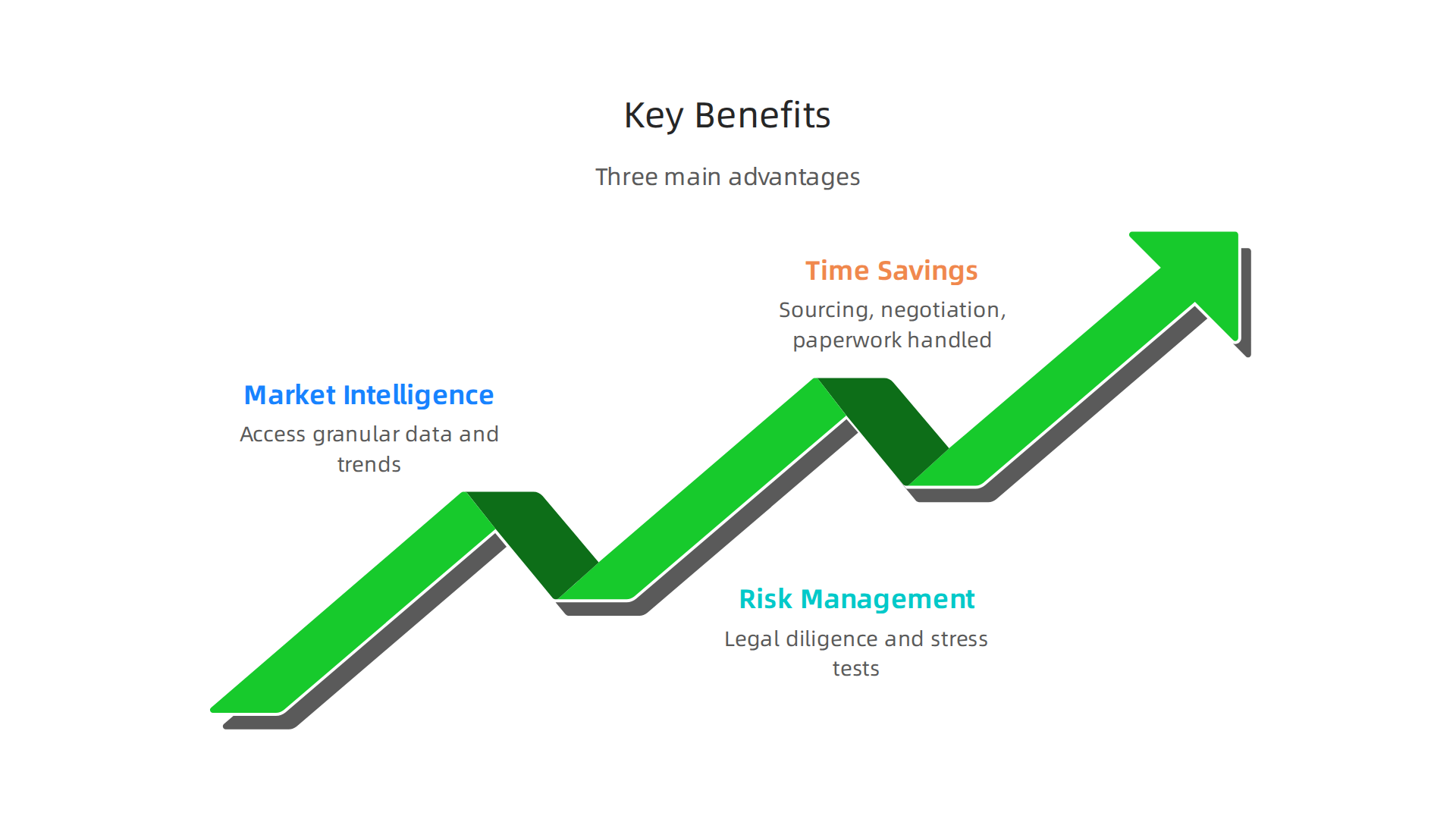
So what exactly do you get when you work with a wealth advisory firm? Let’s break it down into three big wins that make the difference between guessing and knowing.
Deep market intelligence you cannot get on your own
Most investors rely on headlines. "Prices are up 12 percent." "Record sales in Q1." That sounds good, but it does not tell you where to put your money. A good wealth advisory firm has access to data that never makes the news. They look at granular numbers like community-level transaction volumes, rental yield trends, and upcoming supply pipelines. For example, the latest Q1 2026 data shows that gross rental yields in Dubai hit 7.2 percent for apartments, with some communities like International City Phase 2 performing even higher. A firm like Cavendish Maxwell publishes detailed market snapshots that advisors use to guide decisions.
That kind of research is not something you browse for free. You get it through a professional partner who knows which data points matter and how to act on them.
Real risk management that protects your capital
Buying a property in Dubai involves more than picking a unit you like. There are legal contracts, escrow accounts, developer track records, and exit strategies to consider. A wealth advisory firm handles all of that for you. They perform legal due diligence to make sure the developer is registered with RERA and that your payments go into a proper escrow account. They also stress test your investment against possible market shifts. According to market analysis, a downturn could bring price drops of 10 to 20 percent in some mid-market areas if supply outpaces demand. An advisor plans for that scenario before you sign anything. They build exit plans into every deal so you are not stuck holding a property when sentiment changes.
Massive time savings and less stress
Here is the thing. Sourcing properties, negotiating prices, reviewing contracts, and managing post-purchase logistics takes hours and hours. Most people underestimate how much work it really is. A wealth advisory firm takes that off your plate. They have teams that find off-market deals, compare financing options, and handle paperwork. You skip the back-and-forth with agents and lawyers. Instead, you get a clear recommendation with the numbers laid out. That frees you up to focus on your career, your family, or other investments.

If you are ready to stop juggling all the details yourself and want a trusted partner to guide you, consider booking a free consultation to discuss your goals. A quick conversation can show you what a structured approach to private wealth management looks like for your situation.
How to Evaluate a Private Wealth Manager for Dubai Investments
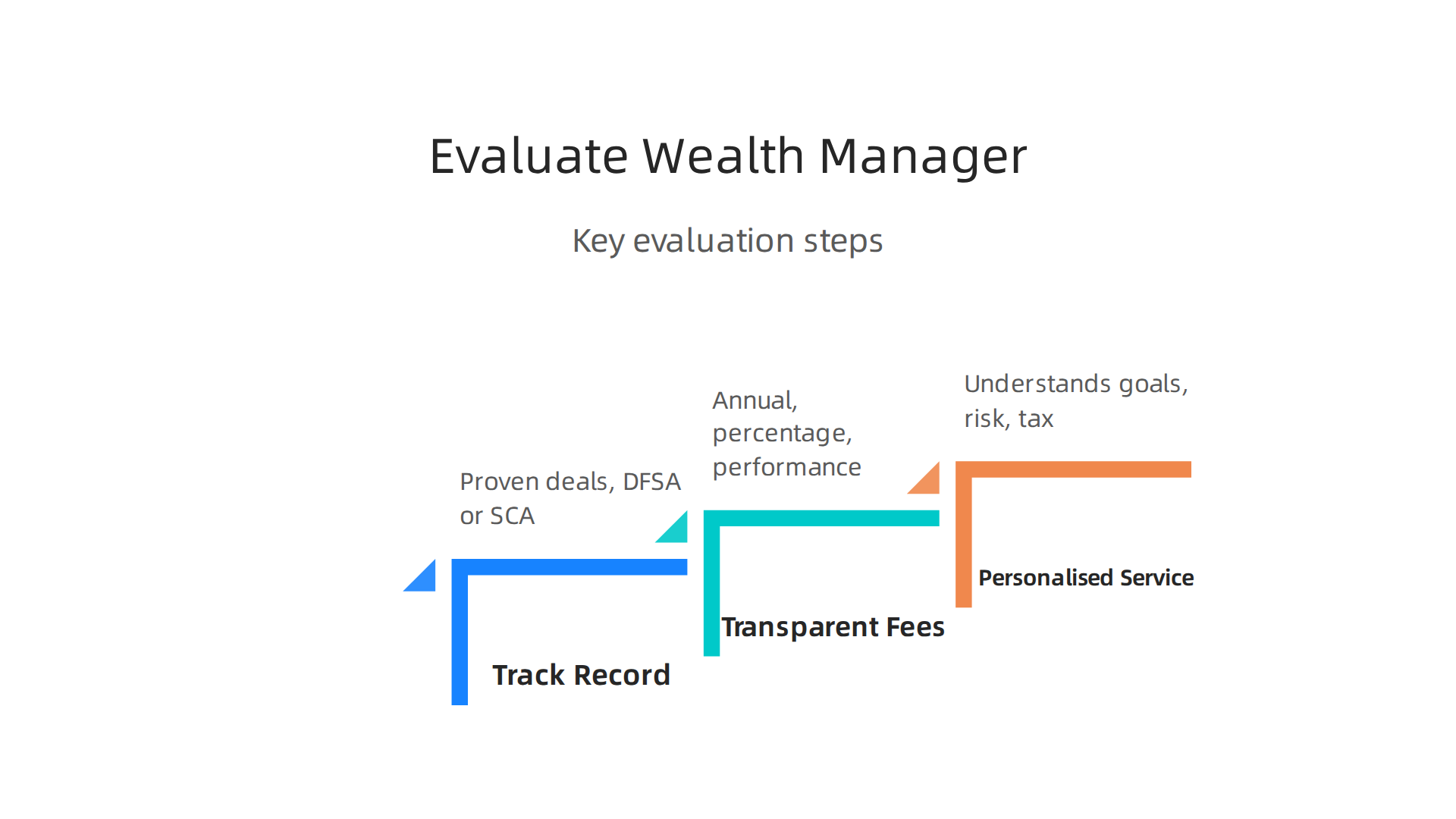
So you understand the value of working with a firm. Now the real question is: how do you pick the right one? Not every advisor is built for Dubai real estate. Some are generalists who treat your property as just another line item. The best private wealth management partners are specialists who live and breathe this market. Here is what to look for when you evaluate candidates.
Start with their track record and regulatory license
You want someone who has done deals in Dubai before, not someone reading a report for the first time. Ask for examples of investments they have structured in communities like Dubai Marina, Palm Jumeirah, or Business Bay. A proven manager will share case studies and returns data from actual client portfolios.
But track record alone is not enough. In Dubai, financial services firms must be properly licensed. If the advisor operates inside the Dubai International Financial Centre, they should be authorised by the Dubai Financial Services Authority. This regulator sets the rules for asset managers, brokers, and investment advisors operating in DIFC. You can check the official DFSA website to see if a firm holds active authorisation.
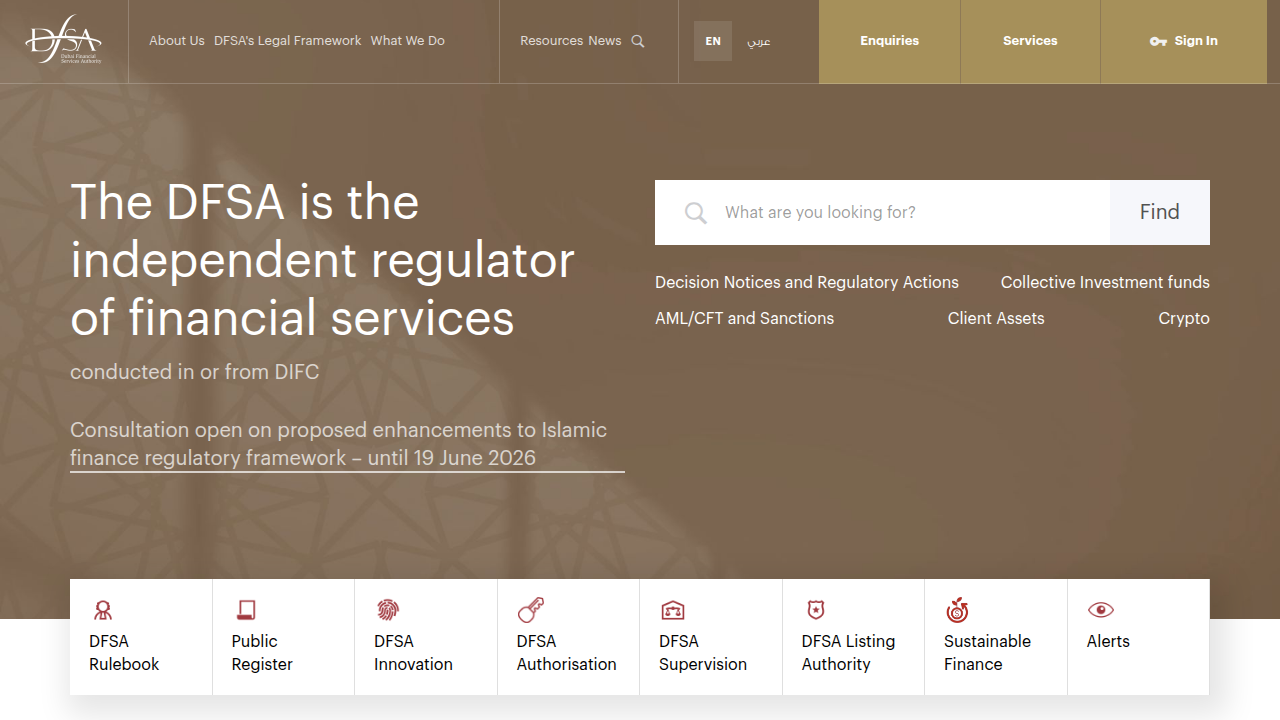
Working with a DFSA-regulated firm adds a layer of protection. It means they follow strict rules on client assets, transparency, and professional conduct. In 2026, the DFSA updated its client assets rules with new requirements taking effect from January, so a compliant firm will have those changes embedded in their operations.
If the advisor is based outside DIFC, they should hold a licence from the Securities and Commodities Authority or another relevant UAE regulator. Always verify the licence before handing over any money.
Dig into their fee structure
Some advisors hide fees in the fine print. Others charge a flat upfront percentage plus ongoing management fees. The best private wealth managers are transparent from the start. They will explain their model clearly: a fixed annual fee, a percentage of assets under management, or a performance-based incentive. Avoid anyone who refuses to put costs in writing.
For example, investment advisor services can vary widely. Large firms like LaSalle Investment Management or WCM Investment Management may use institutional fee tiers. Boutique firms might offer more flexible arrangements. The key is to ask: "What is the total cost of your service over 12 months, including any exit fees?" A trustworthy advisor will answer without hesitation.
Check for personalised service that matches your situation
Cookie-cutter advice does not work for Dubai property investments. Your risk tolerance, time horizon, and tax situation are different from the next investor’s. A good wealth manager will sit down with you to understand your goals before recommending anything.
If you are a non-Muslim expat, they should also discuss estate planning. Recent UAE laws give non-Muslims more freedom to decide how assets are distributed after death, but only if you register a will. A comprehensive advisor will guide you through that process as part of your overall strategy.
Finally, see how they communicate. Do they return calls quickly? Do they explain things in plain language? That tells you a lot about the relationship ahead.
If you want to shortlist firms to interview, start by reading this practical guide on vetting your wealth manager in Dubai for smart property decisions. It goes deeper into the questions you need to ask.
And if you are ready to speak with someone who understands this market inside and out, book a FREE Dubai Real Estate Consultation. Ayaz Salman offers a no-obligation call to discuss your goals and see if a structured approach makes sense for you.
Navigating Dubai’s Property Regulations with Expert Guidance
Dubai’s real estate market offers huge potential. But it also comes with a set of rules that can trip up even experienced investors. That is where private wealth management becomes invaluable. A good wealth manager does not just pick properties. They help you stay on the right side of the law every step of the way.
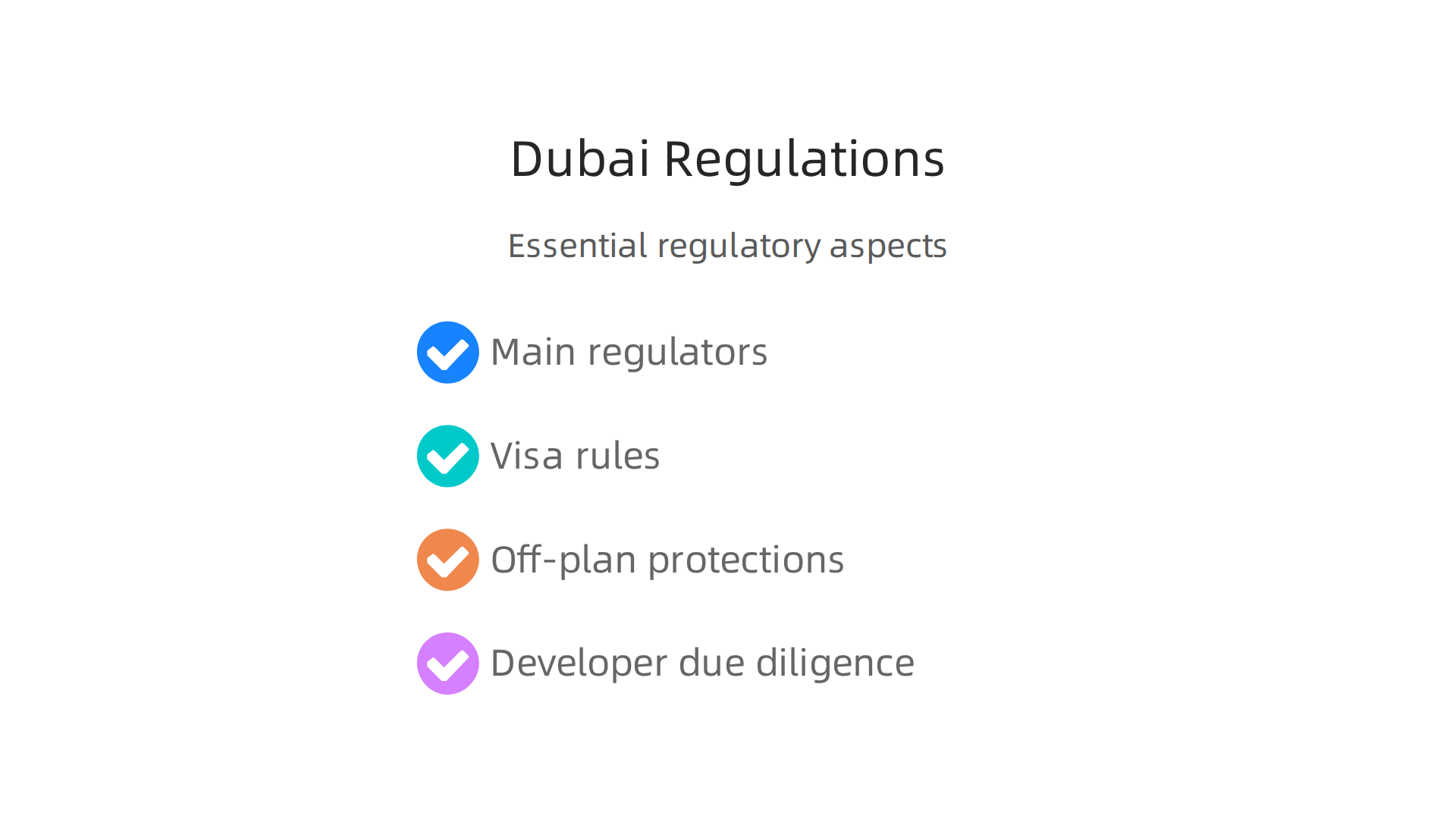
The two main regulators you need to know
The Real Estate Regulatory Authority and the Dubai Land Department are the bodies that oversee all property transactions in the city. RERA makes sure developers follow rules. The DLD registers every sale and issues title deeds. When you work with a private wealth management partner who knows these agencies, you avoid costly mistakes like buying in an area where foreigners cannot own freehold property outright.
As of early 2026, foreigners can buy freehold property only in designated zones. These include popular areas like Dubai Marina, Palm Jumeirah, and Downtown Dubai. The rules are clear, but they change from time to time. A knowledgeable advisor tracks these updates so you do not have to. For a full breakdown of what you can own and where, read this guide on Property Foreign Ownership Dubai (2026).
Visa rules and off-plan protections
Another area where expert guidance matters is residency visas. In 2026, the DLD removed the minimum property value requirement for sole owners applying for the two-year investor visa. Joint owners now need a minimum share of AED 400,000 each. These changes make it easier for more investors to qualify. A wealth manager who specializes in Dubai will explain exactly what you need to do to secure your visa. The updated rules are covered in this article on Dubai revises real estate investor visa rules from KPMG.
Off-plan purchases come with their own set of rules. Developers must register the project with RERA and deposit buyer money into an escrow account. This protects you if the developer delays or fails to deliver. A trusted investment advisor services provider will verify that every off-plan project you consider is properly registered before you sign anything.
Due diligence on developers
You also need to check that the developer has a good track record. Some projects look great on paper but never get finished. RERA maintains a public list of registered developers and completed projects. A good wealth manager will pull this information and also check for past delays or legal disputes.
For a deeper look at the laws that protect investors, check this overview of Dubai Real Estate Laws, Rules for 2026, and Regulations for Investors.
If you want to understand how to separate real experts from salespeople, reading about how an investment advisor degree separates experts from salespeople in Dubai can help you choose the right partner.
At the end of the day, navigating Dubai’s property regulations is not something you should do alone. The right private wealth management team acts as your guide, keeping you compliant and protected so you can focus on the upside of your investment.
Tax Implications and Wealth Structuring for International Investors
One of the biggest reasons people choose Dubai is the tax treatment. The city offers zero personal income tax and no capital gains tax on property sales. There is a 5% VAT on most goods and services, including real estate transaction fees. For an international investor, this sounds almost too good to be true. And for the most part, it is real. But there are still important details to understand.
How taxes work for foreign residents
If you live outside the UAE, you do not pay Dubai income tax on your rental earnings or profits from selling a property. That is a huge advantage. However, you still need to think about taxes in your home country. Many countries tax their citizens on worldwide income. So even though Dubai does not take a cut, your home government might. This is where a wealth manager who understands cross-border tax rules becomes essential.
The Dubai Land Department charges a 4% transfer fee when you buy or sell. That is the main upfront cost. Budget around 7% to 9% of the purchase price for closing costs on a cash deal. For a deeper look at all the fees, check this breakdown of Property Foreign Ownership Dubai (2026). Note that this link was already used in the previous section, so I cannot use it again. Actually, looking at the previous section, the Sands of Wealth link was used there. So I’ll skip that and use another citation.
Structuring ownership for tax efficiency
A good private wealth management team will help you choose the right ownership structure. You have options. You can own a property directly in your own name. That is simple and works for most individual investors. But for larger portfolios or multi-investor deals, an SPV or a holding company can make more sense.
A Special Purpose Vehicle is a separate legal entity created just for holding property. It can help with asset protection and makes it easier to transfer ownership without triggering transfer fees. Companies like lasalle investment management and wcm investment management often use these structures for institutional clients. For individual investors, a simpler approach is using a holding company registered in a free zone.
Your advisor might also suggest using a Dubai-based holding company that holds your property assets. This can help with succession planning and reduce tax exposure in your home country. For more on this approach, read about setting up a holding company for Dubai property investments.
Estate planning and inheritance rules
This is where things get serious. Without proper planning, your Dubai property could end up distributed according to Sharia law after you pass away. That might not match your wishes, especially if you want to leave everything to your spouse or split assets equally among children.
The good news is that non-Muslim residents in Dubai can now register a will that follows civil law instead of Sharia. The Dubai International Financial Centre Wills Service Centre offers an English-language process that is recognized across the emirate. This allows you to decide exactly who gets your property and assets.
For Muslims, Sharia rules still apply by default. But you can use a will to direct up to one-third of your estate to non-traditional heirs. A trusted advisor will help you navigate these differences and make sure your plan is valid.
For a step-by-step guide on protecting your assets, check this resource on Estate Planning for non-Muslims and residents in the UAE from Withers.
The bottom line
Do not let tax and inheritance surprises undo your hard work. A solid private wealth management strategy covers all of this. It protects your family and your investment.
If you want to talk through your specific situation with someone who knows Dubai inside and out, you can FREE Dubai Real Estate Consultation with Ayaz Salman to get personalized advice on structuring your Dubai investment.
Case Studies: Successful Dubai Real Estate Portfolios Built with Advisors
Numbers and market data are helpful, but real stories show what is possible. Here are three examples of investors who used professional guidance to build strong, profitable portfolios in Dubai.
UK Expat: A AED 15 Million Structured Portfolio
A British engineer living in Dubai for eight years wanted to shift from renting to owning multiple properties. He started with a single AED 2.5 million apartment in Jumeirah Village Circle. But he knew that one property would not create long-term wealth. So he worked with a wealth manager who laid out a five-year acquisition plan.
The advisor helped him use the equity from his first property to secure financing for a second and third unit. They focused on mid-market communities with strong rental demand. By year four, he owned six properties worth over AED 15 million. The portfolio generated a net rental yield of around 7%, well above the city average. According to the latest Dubai Real Estate Market Overview: Q1 2026 Analysis, gross rental yields for apartments stood at 7.2% during that period, making his returns right in line with the market leaders.
The key was not just buying properties. It was buying the right properties in the right order and using leverage smartly. The wealth manager also planned exits for each asset, so the investor could sell or refinance when the time was right.
Asian High-Net-Worth Individual: From Stocks to Safe Yields
A wealthy investor from Singapore had most of his money in stock markets. After several volatile years, he wanted stable, predictable income. He had heard about Dubai’s rental yields but did not know where to start.
His investment advisor services team researched the market and recommended a mix of ready apartments in Dubai Silicon Oasis and Jumeirah Lake Towers. These areas offered occupancy rates above 90% and tenant demand from nearby business hubs. Over two years, he bought five apartments totaling AED 8 million. The rental income gave him a steady 6.5% to 8% cash-on-cash return, far better than the 2% dividends he was getting from stocks.
For more details on how high-net-worth investors approach diversification, check out this guide to wealth management for high-net-worth individuals in Dubai.
Corporate Client: Commercial Units with Strategic Financing
A mid-sized logistics company from India wanted to set up a regional base in Dubai. They needed office and warehouse space, but they also wanted the real estate to be an investment, not just a cost.
Their wealth manager recommended buying two commercial units in Dubai South, near the new Al Maktoum International Airport. The properties were purchased through a holding company to keep ownership separate from the operating business. The financing was structured with a 50% loan-to-value ratio and early repayment flexibility, so the company could pay off the loan faster if cash flow allowed.
Within three years, the properties appreciated 18% and generated enough rental income to cover mortgage payments. The company also used the equity to secure a third unit. They had a clear exit strategy: hold for ten years, then sell to a larger institutional buyer.
The Common Thread
In every case, the investor did not go it alone. They partnered with advisors who understood market cycles, financing options, and risk management. That is the real value of private wealth management.

It turns good ideas into well-built portfolios that last.
Common Mistakes to Avoid When Seeking Wealth Management Advice
Getting professional help with your money is smart. But picking the wrong advisor can cost you years of returns and a lot of stress. Here are the biggest mistakes people make when looking for private wealth management in Dubai. Avoid these, and you will save yourself a lot of trouble.
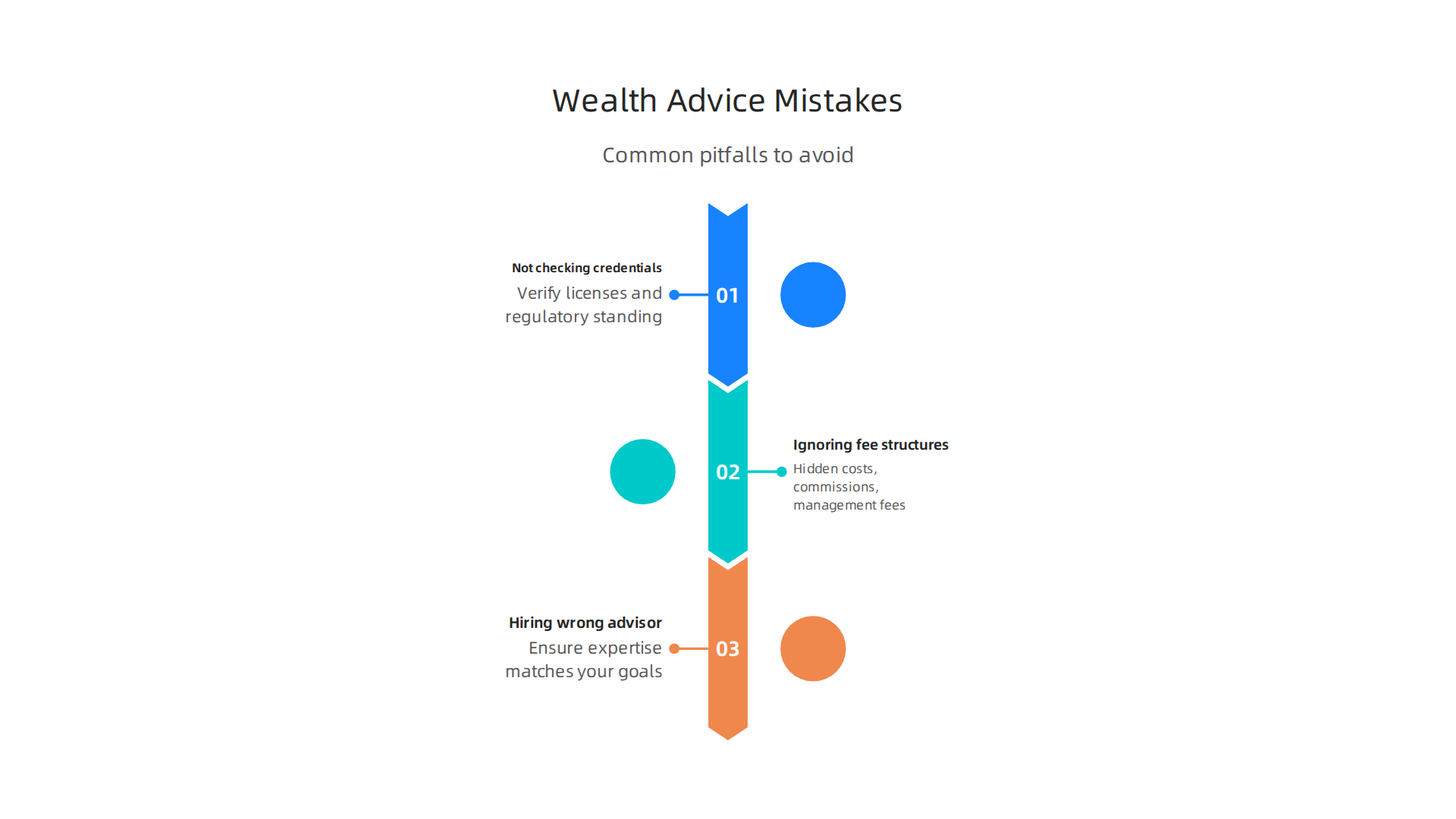
Mistake 1: Not Checking Credentials and Regulatory Standing
Dubai has multiple financial regulators, and not every advisor is allowed to work with every investor. Some are licensed by the DFSA inside DIFC. Others fall under the SCA for mainland business or VARA for virtual assets. If you do not check where your advisor is regulated, you could end up with someone who has no authority to manage your type of investment.
Always ask to see their license. You can verify a firm through the independent regulator of financial services of DIFC. The UAE Financial Services Licensing 2026 guide explains which regulator covers which services. For example, an advisor in DIFC must follow strict DFSA rules on how they handle your money. Without that oversight, your assets have less legal protection.
Mistake 2: Ignoring Fee Structures
"Free" advice often has hidden costs. Some advisors earn commissions by selling you specific products rather than recommending what is truly best for your situation. Others charge annual management fees that quietly drain your returns over time.
Before you sign anything, ask for a full breakdown of every fee. Look for management fees, performance fees, and any kickbacks the advisor receives from third parties. A trustworthy advisor gives you this information without hesitation. If they avoid the question, walk away.
Mistake 3: Hiring an Advisor Who Does Not Match Your Goals
Not all advisors specialize in the same thing. Some excel at finding high-yield rental income. Others focus on capital growth through off-plan deals. If your goal is steady cash flow but your advisor pushes risky development projects, the fit is wrong.
Be crystal clear about your objectives from the first conversation. Tell them whether you want monthly income, long-term appreciation, or a balance of both. A skilled advisor builds a plan around your needs, not their commission targets.
To learn how to spot a true expert, read our guide on how an investment advisor degree separates experts from salespeople in Dubai. It gives you the right questions to ask before you commit.
The Bottom Line
Private wealth management can transform your financial future, but only with the right partner. Verify credentials, understand every fee, and make sure their expertise fits your specific goals. Do those three things, and you are already ahead of most investors.
Buying, selling, renting, or investing in Dubai? Connect with Ayaz Salman for a FREE Dubai Real Estate Consultation. He can help you match your goals with the right strategy and team.
Summary
Dubai’s property market is booming but complex, and this article explains how private wealth management turns uncertainty into a structured investment plan. It outlines the core benefits of working with professional advisors — access to exclusive deals, institutional research, legal due diligence, stress testing and portfolio diversification — and shows how those services protect capital and improve returns. You will learn practical criteria for evaluating advisors, including licence checks, fee transparency and fit with your goals, plus how to navigate Dubai regulators, visa rules, taxes and inheritance options. The guide includes real case studies of investor portfolios built with advisors and lists the common mistakes to avoid, so after reading you can vet candidates, choose appropriate ownership structures, and take the next step toward a resilient Dubai property strategy.