
How to Hire a Fiduciary Investment Advisor in Dubai

Introduction
Dubai’s real estate market has reached an incredible milestone. In 2025, the city recorded over AED 682 billion in property sales, and the momentum hasn’t slowed down in 2026. Global investors keep pouring in, drawn by tax-free rental income, high yields, and strong price growth. According to market data, Dubai offers gross rental yields averaging around 7.5%, making it one of the most attractive cities for property investors worldwide.
But here’s the thing. Investing in a foreign market comes with real risks. Without a trusted guide, you could overpay for a property, pick the wrong location, or get caught in legal and regulatory traps.

The market is complex, and not everyone who calls themselves an advisor actually has your back.
That is why it makes sense to hire an investment advisor who operates as a fiduciary. A fiduciary investment advisor is legally bound to put your interests first. They must act with loyalty, care, and full transparency. There are no hidden commissions or advice designed to benefit their own wallet. The legal standard is clear: advisors must prioritize your financial well-being above all else. This is especially important in a foreign regulatory environment like Dubai, where the rules may be unfamiliar.
This guide will walk you through the exact steps to find and vet a fiduciary investment advisor for Dubai real estate. You will learn what fiduciary duty really means, how to check credentials, what questions to ask, and how to negotiate fair fees. By the end, you will feel confident enough to make a smart, informed decision.
For a broader overview of why professional guidance matters, read our guide on why you need a top investment advisor firm in Dubai.
And for deeper insight into the legal obligations that protect you, explore this resource on fiduciary obligation in wealth management.
If you are ready to take the next step: Buying, selling, renting, or investing in Dubai? Connect with Ayaz Salman for a FREE Dubai Real Estate Consultation.
What Is a Fiduciary Investment Advisor and Why Does It Matter in Dubai?
So what does the word "fiduciary" actually mean? In simple terms, a fiduciary is someone who must put your interests ahead of their own. This is not just a nice idea. It is a legal duty. A fiduciary investment advisor is required to act with loyalty, care, and full honesty at all times.
According to Hunnicutt Law Group’s guide on fiduciary duty in real estate, fiduciaries must "act with the highest degree of honesty and loyalty" toward their clients. That means no hidden commissions, no secret deals, and no recommendations that benefit the advisor’s pocket over yours.
The SEC breaks this down into two main rules: the duty of care and the duty of loyalty. The duty of care means your advisor must give advice that truly fits your goals, risk level, and financial situation. The duty of loyalty means they cannot favor their own interests or those of another client over yours. As explained in a detailed resource on what the fiduciary duty means under 2026 rules, fiduciaries must disclose every conflict of interest clearly so you can decide whether to accept it.
Now, why does all this matter in Dubai’s real estate market? In the UAE, financial advisors are regulated by bodies like the Dubai Financial Services Authority (DFSA) and the Securities and Commodities Authority (SCA). But here is the key point: not every licensed advisor is a fiduciary. Some work under a "suitability" standard, which only requires that their recommendations be "suitable" for you, not necessarily the best option. That gap can cost you thousands. For example, an off-plan property that seems perfect might actually have hidden risks that a non-fiduciary advisor has no duty to warn you about. A DFSA-regulated firm does have strict rules, but you still need to confirm that your advisor personally operates under fiduciary obligations. A recent update on DFSA regulation highlights that physical presence and formal compliance are required, but fiduciary duty goes beyond basic licensing.
When you hire an investment advisor in Dubai, you must ask this question directly: "Are you a fiduciary?" If they hesitate or give a vague answer, that is a red flag. A true fiduciary will be proud to say yes and explain how they avoid conflicts.
For a deeper look at what separates real experts from salespeople, read our guide on how an investment advisor degree separates experts from salespeople. And if you are curious about a well known global firm that follows strict fiduciary principles, check out this honest breakdown of St. James’s Place wealth management in Dubai property investment.
Understanding the difference between fiduciary and suitability standards is not just legal jargon. It is the single most important factor in protecting your money in Dubai’s fast moving off-plan and secondary markets.
Key Regulations Governing Investment Advisors in Dubai
Dubai’s real estate market is not a free for all. Several government bodies watch over how advisors operate. Knowing who regulates what helps you spot the real professionals from the rest.
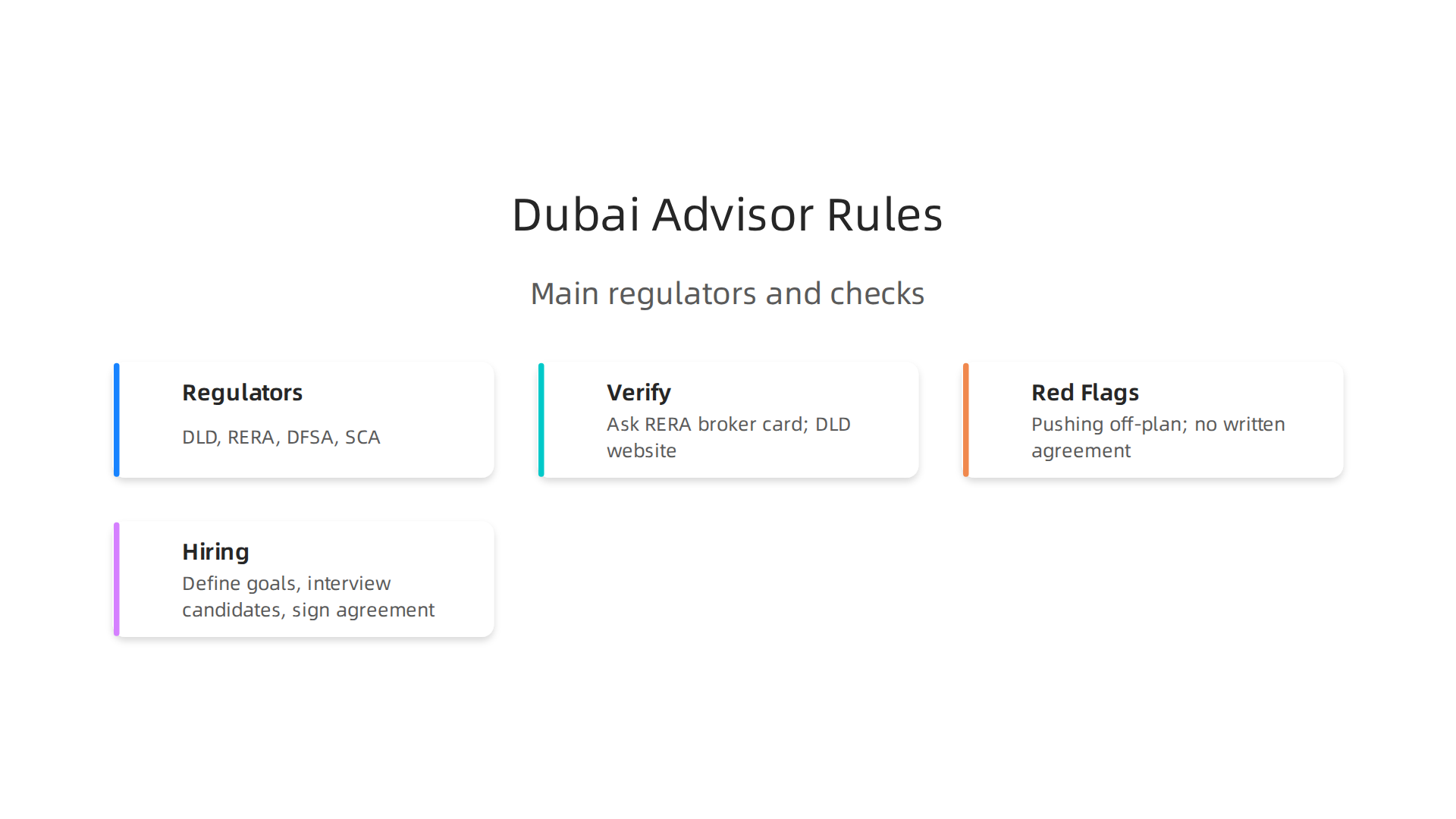
Dubai Land Department (DLD) sits at the top. This is the main government authority that oversees all property transactions in the emirate. The DLD sets the rules for how properties are bought, sold, and registered. Every advisor working in Dubai real estate must follow DLD standards.
Real Estate Regulatory Authority (RERA) is an agency under the DLD. RERA focuses specifically on the property market. If you are looking at off-plan developments, RERA is the body that matters most. RERA makes sure developers and advisors follow strict rules about marketing, payments, and project timelines. Any advisor who recommends off-plan properties must be registered with RERA.
Then you have Dubai Financial Services Authority (DFSA) . This body regulates financial services in the Dubai International Financial Centre (DIFC). If your advisor manages a portfolio of investments or gives advice on complex financial products, they likely fall under DFSA rules. A key detail about DFSA regulation is that firms must have a physical office in Dubai with proper compliance systems in place. Virtual offices do not count.
Securities and Commodities Authority (SCA) covers the wider UAE market outside the DIFC. SCA regulates investment advisors who offer services across the emirates.
Here is the practical takeaway. When you want to hire investment advisor in Dubai, you need to check which body regulates them. Ask for their license number. Then verify it with the relevant authority.
Recent updates between 2024 and 2026 have made things stricter. New transparency rules now require advisors to disclose every commission they earn on a transaction. They must also tell you about any conflict of interest before you sign anything. This is a big shift that protects buyers from hidden fees.
The Miami Law review of fiduciary obligations in wealth management explains that fiduciaries must keep detailed records of all decisions and recommendations. That same standard is becoming more common in Dubai’s regulatory environment.
So what does this mean for you? Before you work with any advisor, do a simple verification check. Confirm their license with the correct regulator. Ask them which body oversees their work. If they cannot answer clearly, that is a warning sign.
For a step by step guide on what to check before trusting anyone with your money, read this practical advice on vetting your wealth manager in Dubai for smart property decisions.
The Dubai property market hit AED 2 trillion in transactions over the past five years. That is a lot of money moving around. Good regulations help keep that market honest. But regulations only work if you know how to use them.
If all this sounds like a lot to handle on your own, you do not need to figure it out alone. FREE Dubai Real Estate Consultation is available to help you understand the rules and connect with properly licensed advisors who put your interests first.
How to Verify Credentials and Registrations of a Dubai Advisor
Now that you know which authorities oversee Dubai advisors, the real work begins. You need to confirm that any advisor you trust with your money is officially registered and qualified.
Here is a straightforward process to do that.
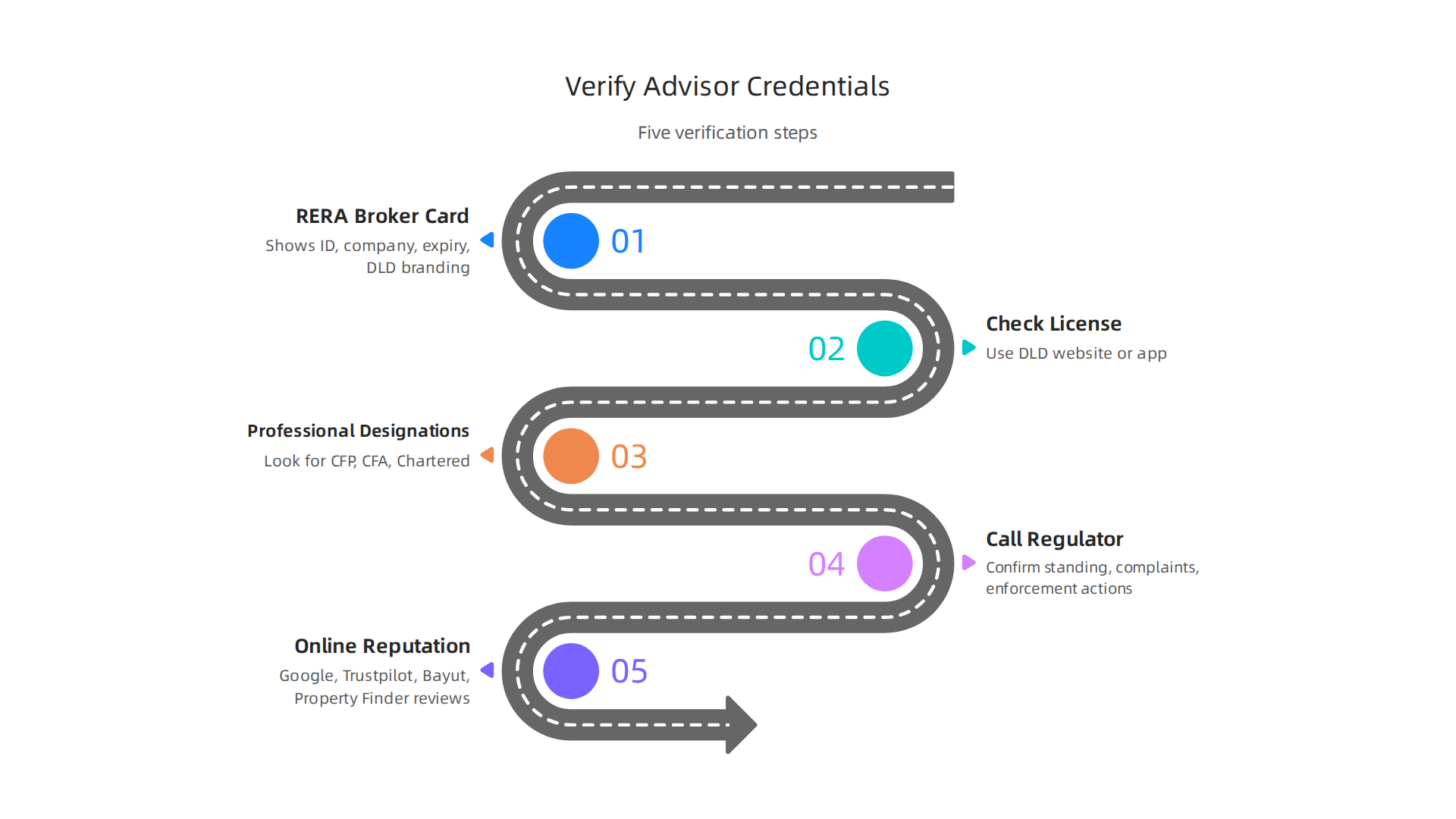
Step 1: Ask for the RERA Broker Card or License Number
Every licensed real estate agent in Dubai must carry a RERA Broker Card. This card shows their full name, broker ID number, brokerage company, expiry date, and official DLD branding. A legitimate advisor will share this without hesitation. If they hesitate or make excuses, consider it a red flag. For a full breakdown of what to look for, read this guide to verifying a Dubai real estate agent which includes the exact steps to check broker details.
Step 2: Check the License Online
Dubai makes verification easy. Use the Dubai Land Department (DLD) website or the Dubai REST app. Enter the broker’s name or ID number to see if their license is active and which brokerage firm they work for. If the advisor operates within the DIFC and offers financial products, check the DFSA Authorised Firm Register instead. This register lists all firms authorized to provide financial services, including investment management.
For off-plan property advisors, also confirm that their brokerage firm is registered with RERA. You can verify this on the DLD’s official e-services page for real estate activity license checks.
Step 3: Verify Professional Designations
Licenses tell you an advisor is legal. Professional designations tell you they are competent and serious about their work. Look for titles like CFP (Certified Financial Planner), CFA (Chartered Financial Analyst), or Chartered Wealth Manager. These credentials require years of study and a commitment to ethical standards. They signal that the advisor puts your interests first, similar to a fiduciary investment advisor.
Step 4: Call the Regulator Directly
A quick phone call to the DLD or DFSA can confirm an advisor’s standing. Ask if there have been any complaints or enforcement actions against them. This step takes only a few minutes but can save you from serious trouble.
Step 5: Check Online Reputation and Past Transactions
Search for the advisor’s name on Google, read client reviews on platforms like Google and Trustpilot, and check their listings on trusted portals like Bayut and Property Finder. These platforms only allow RERA-verified agents to post listings, so a visible permit number adds credibility.
For a deeper look at how to choose a truly qualified professional, explore this guide on how to choose the best property investment advisor in Dubai for smart growth.
By following these steps, you can confidently hire investment advisor in Dubai who meets the highest standards of professionalism and integrity. Do not skip the verification. Your money and peace of mind depend on it.
Red Flags and Due Diligence When Vetting Advisors
Verifying a license is just the first step. Even a registered advisor can have bad intentions. You need to watch for warning signs that show someone is more interested in their commission than your success.

Here are the biggest red flags to look for when you want to hire investment advisor in Dubai.
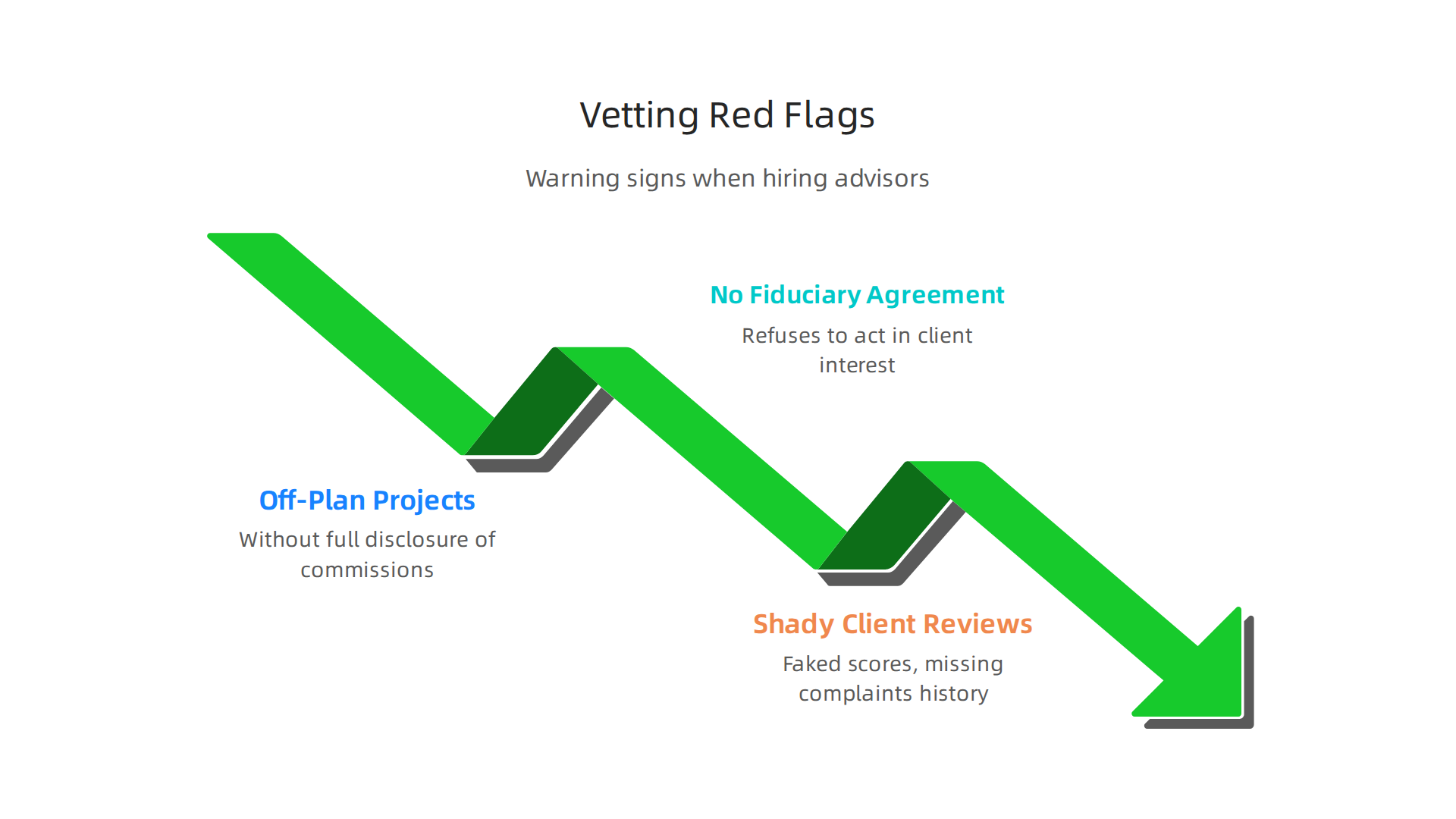
Red Flag 1: Pushing Off-Plan Projects Without Full Disclosure
Some advisors only recommend off-plan properties from specific developers. They may earn a higher commission from those developers and not tell you. A trustworthy advisor will explain every commission they receive and show you multiple options. If they push one project hard and avoid talking about other opportunities, that is a clear warning. As one industry expert explains, a broker who mainly sells developer stock may have few transactions listed on their RERA license because the developer handles the Oqood registration — this makes it harder to verify their sales history. Read more about this in a Reddit discussion on checking if a real estate broker is legit.
Red Flag 2: No Written Fiduciary Agreement
A fiduciary investment advisor is legally required to put your interests first. In Dubai, not every advisor operates this way. Some work as salespeople for developers. You must ask for a clear written agreement that states they will act in your best interest. If they refuse to explain how they get paid or cannot provide a fiduciary agreement, walk away. This concept is central to understanding what is registered investment advisor and why it matters. For a deeper look at how credentials separate true experts from salespeople, check out this guide on how an investment advisor degree separates experts from salespeople in Dubai.
Red Flag 3: Shady Client Reviews and Missing Complaints History
Online reviews can be faked. Do not trust a perfect 5-star score from just a handful of accounts. Cross-reference testimonials on multiple platforms like Google, Trustpilot, and property portals. Also check whether the advisor has unresolved complaints on the RERA portal. A clean record does not mean they are perfect, but a string of complaints is a clear no-go. Ask for references from investors with similar goals to yours. If they cannot provide any, that tells you something.
Your Next Step
Finding a trustworthy professional takes work, but it pays off. If you want to skip the guesswork and speak with a verified expert who understands the Dubai market, you can get a FREE Dubai Real Estate Consultation with Ayaz Salman. He can help you review your options and avoid the common traps that cost investors money.
Cost Structures: Understanding Fees and Commission Models in Dubai
Now that you know what red flags to look for, let’s talk about something just as important: how advisors get paid. The way an advisor earns money tells you a lot about whether they will put your interests first. Before you hire investment advisor in Dubai, you need to understand the two main fee models.

Fee-only fiduciary advisors charge you directly. They do not earn commissions from developers or third parties. This is the gold standard for trust. A fiduciary investment advisor typically charges one of three ways:
-
A percentage of assets under management (AUM). This is the most common. You pay about 1% of your total invested amount each year. For example, if you invest AED 1,000,000, you pay around AED 10,000 per year. As industry data shows, a typical fee-only financial planner charges about 1% of assets per year.
-
A flat fee or retainer. You pay a set amount each month or each year. This works well if you want ongoing advice without linking the fee to your portfolio size.
-
An hourly rate or one-time planning fee. You pay only for the time spent building your plan. Fees for a complete financial plan can range from AED 3,600 to AED 18,000 depending on complexity.
A true fiduciary will never hide commissions or earn secret kickbacks. They put everything in writing.
Commission-based advisors are different. In Dubai real estate, many advisors earn commissions from developers for selling off-plan units. Those commissions can reach 5% to 7% of the property price. That creates a clear conflict. An advisor may push a specific project because it pays them more, not because it is best for you. If you work with someone who says they are a registered investment advisor but also sells real estate directly, ask tough questions about how they earn money.
Beyond advisory fees, you also need to account for other costs when you invest in Dubai property. The Dubai Land Department charges a 4% registration fee on every purchase. If you use a property manager, expect to pay ongoing fees. The property management fee structure in Dubai ranges from 5% to 10% of annual rental income for long-term leases. For short-term rentals, management fees can go up to 25%.
When you add everything up, your total cost of ownership includes: advisory fees, the 4% DLD fee, management fees, plus any maintenance or service charges. A good advisor will walk you through this full picture before you commit.
If you want a deeper look at how top firms structure their services and fees, check out this guide on choosing the best property investment advisor in Dubai. It explains what to expect from different types of advisors and how to compare their offerings.
The rule is simple: never trust an advisor who cannot clearly explain their fees in writing. Whether you pay by the hour, by the year, or by a percentage of your portfolio, the costs should be transparent from day one.
Steps to Hire and Onboard Your Fiduciary Advisor
Now that you understand how advisors get paid, the next step is actually finding and hiring the right one. When you decide to hire investment advisor in Dubai, you need a clear process.
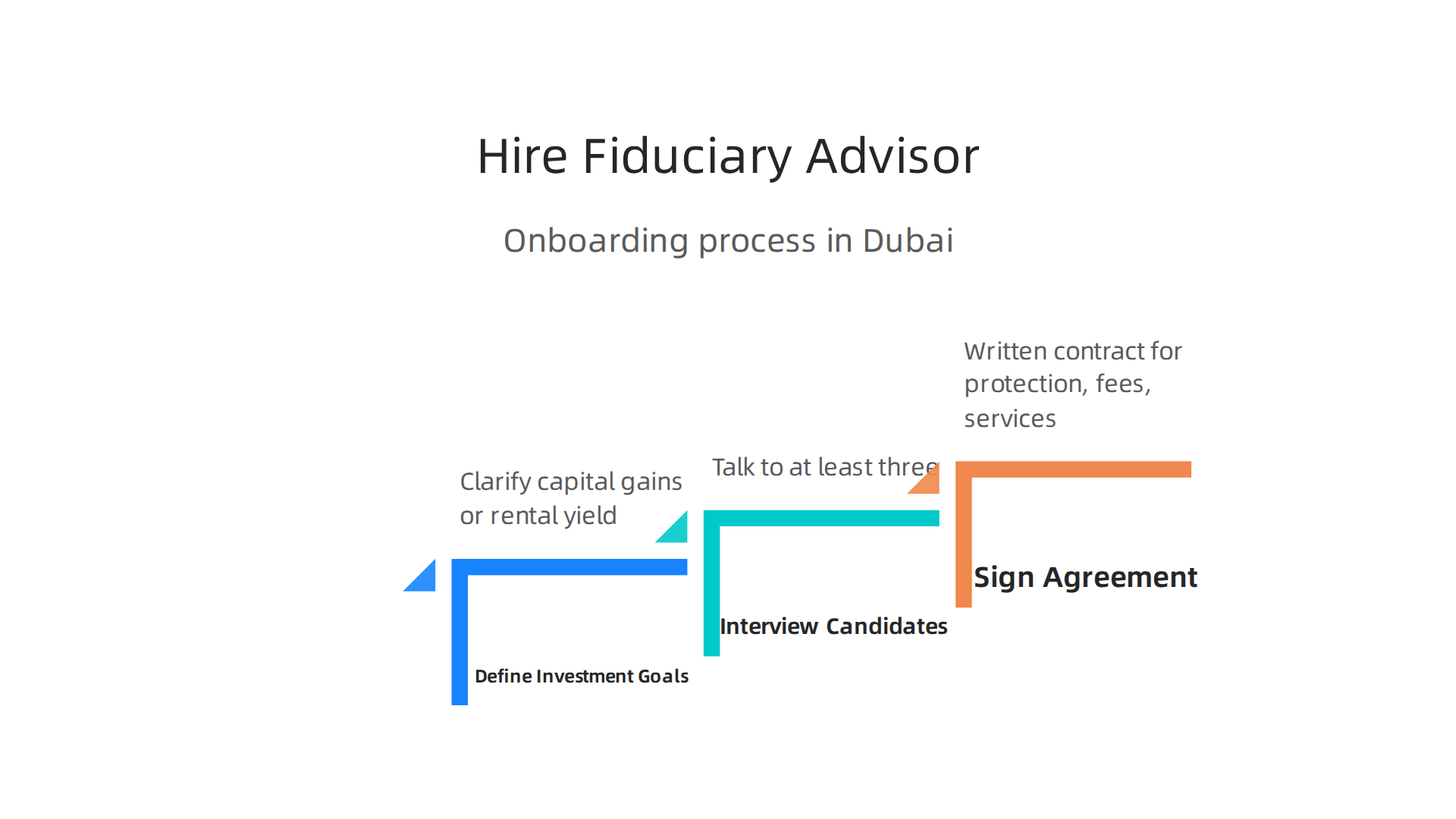
This keeps you from making a costly mistake. Follow these three steps.
Step 1: Define Your Investment Goals
Before you talk to anyone, get clear on what you want. Are you after capital gains from buying and selling? Or do you want steady rental yield each year? Maybe you want to diversify your portfolio across different property types and locations.
Write down your goals. For example: "I want to buy a villa in Palm Jumeirah for AED 5 million and earn at least 6% rental income per year." Or "I want to invest in off-plan studio apartments and sell them after two years for a profit."
Once you know your goals, look for an advisor whose expertise matches them. Some advisors specialize in luxury property. Others focus on affordable units or commercial real estate. If you work with a fiduciary investment advisor, they will help you shape realistic goals based on market data.
Step 2: Interview at Least Three Candidates
Do not hire the first advisor you meet. Talk to at least three. Use a standard checklist to compare them. Your checklist should include:
- Are they a fiduciary? Ask directly: "Do you legally have to put my interests ahead of your own?"
- Can they show you their fee structure in writing?
- How long have they worked in Dubai’s property market? Have they been through both rising and falling markets?
- Who are their current clients? Can you speak to two of them?
This step is your chance to spot red flags. If an advisor cannot answer these questions clearly, move on. For a deeper guide on what to look for during interviews, check out this article on vetting your wealth manager in Dubai. It covers specific questions to ask and what good answers sound like.
Step 3: Sign a Detailed Services Agreement
Once you pick your advisor, do not start working together until you have a written contract. This agreement is your protection.

It should include:
- A clear statement that the advisor acts as a fiduciary
- The complete fee schedule showing how much you will pay and when
- The exact services they will provide
- How disagreements are handled
- How you can end the agreement and what happens after
Make sure the agreement mentions the client’s investment objectives and the advisor’s duties. A good resource for understanding what should be in this document is this guide on Things to Include in a Financial Advisory Agreement. Read through the key elements before you sign anything.
Pay special attention to the termination clause. You want the freedom to leave if the service is not working. A fair agreement lets either party end the contract with a simple written notice.
Your Next Step
Hiring a fiduciary advisor is one of the smartest moves you can make for your Dubai property investments. The process takes time, but it protects your money. If you are ready to start this journey, get a FREE Dubai Real Estate Consultation. A qualified expert can walk you through your goals and help you find an advisor that fits your needs.
Summary
This guide explains why hiring a fiduciary investment advisor is critical when investing in Dubai real estate and walks you through the exact steps to find, vet, and onboard one. It covers what