
International Holding Company for Dubai Property Investments in 2026
Introduction
Thinking about investing in Dubai real estate in 2026? You are not alone. Foreign investors pour into this market every year, drawn by high rental yields and strong long term growth. But here is the catch. The corporate structure you choose can make or break your returns.
Many investors jump straight into buying property without thinking about how to hold it.

Should you set up a mainland company, a free zone entity, or an offshore structure? Each option changes your tax bill, your ownership rights, and your risk level. And getting it wrong can cost you.
The UAE allows full foreign ownership of commercial companies, which opened the door for international investors. But with that freedom comes a choice. You need to pick the right vehicle wisely.
So what is the best option for property investors in 2026? More and more smart investors are turning to an international holding company as their go to structure. It offers better tax efficiency, clearer asset protection, and simpler management compared to the alternatives.
This guide walks you through the main differences between mainland, free zone, and offshore companies. We will show you exactly how an international holding company works for Dubai real estate, why it beats other options, and how to set one up the right way.
If you want to protect your assets and keep more of your profits, this roadmap is for you.
For a deeper look at how holding companies work specifically in Dubai property, check out our guide on holding company Dubai property investments in 2026.
Book a Consultation to discuss the best structure for your investment goals.
Understanding the UAE Corporate Landscape
Before you pick the right structure, you need to know what options exist. The UAE gives foreign investors three main ways to set up a business. These are mainland, free zone, and offshore companies.
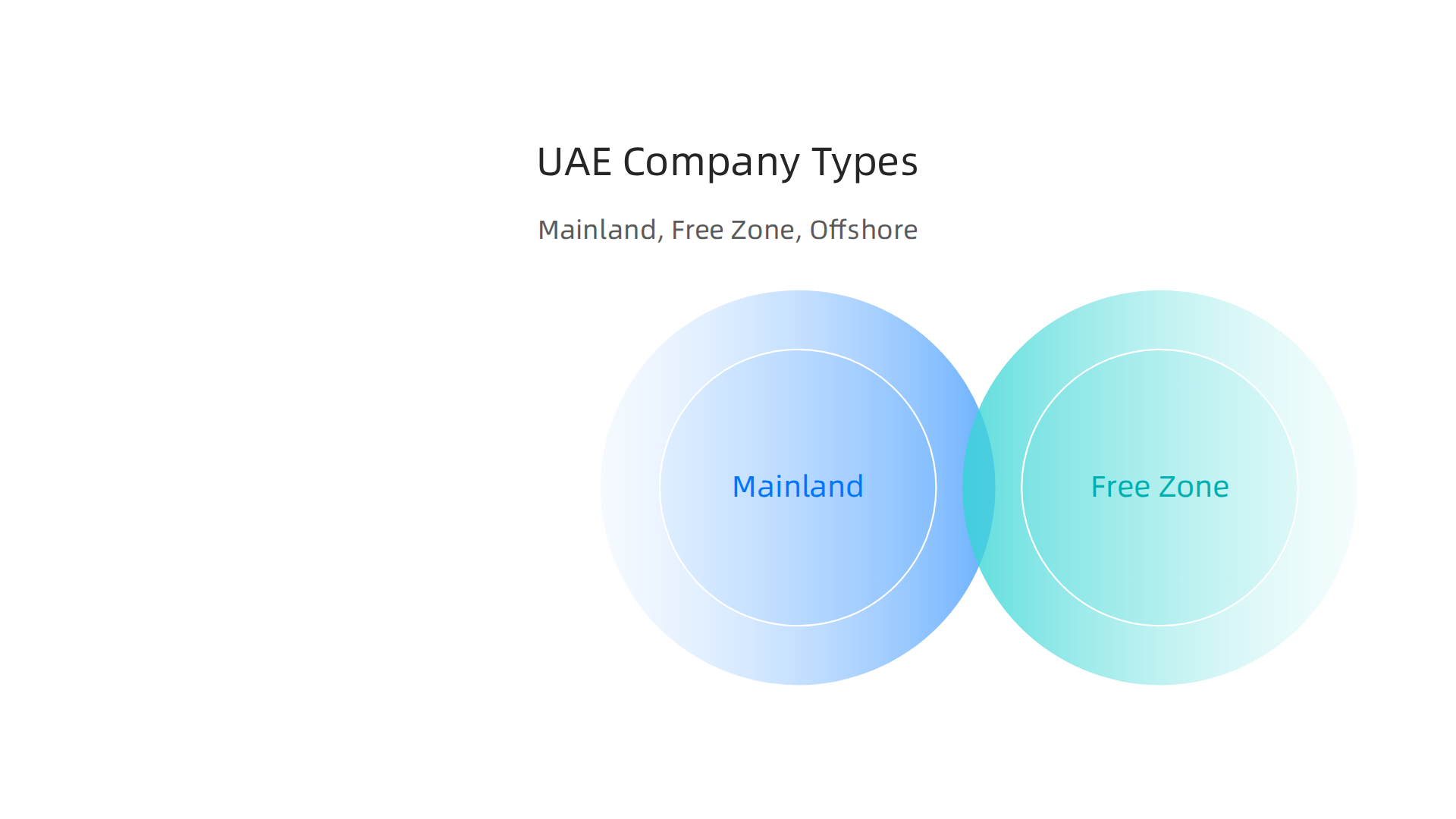
Each one has different rules for ownership, taxes, and where you can operate. The Key Differences: UAE Mainland, Free Zone & Offshore Companies guide explains this well.
Here is what changed in recent years. In the past, a mainland company needed a local partner to own a part of it. In 2026, that is no longer the case. The UAE now allows full foreign ownership of commercial companies. This was a major reform for foreign investors.
But here is the catch. Even with full ownership, a mainland company must pay 9% corporate tax on profits over AED 375,000. That is a key difference compared to free zone options, as shown in Mainland vs. Free Zone Company for Professional Services in the UAE 2026.
So what about free zones? They offer tax breaks and full foreign ownership, but they limit where you can do business. Offshore companies? They are great for holding assets outside the UAE, but they cannot trade inside the country.
This is why more property investors in 2026 are looking at an international holding company. It combines the best parts of these structures. It gives you better tax planning and stronger asset protection for your real estate investments.
For a deeper look at how this works specifically for holding property, check out our guide on holding company Dubai property investments in 2026.
Not sure which structure fits your goals? Book a Consultation to get a clear plan for your investment.
Mainland Companies
Before you choose an international holding company, understand mainland setups. They can trade anywhere in the UAE. Since 2021, the UAE allows full foreign ownership of commercial companies. However, they pay 9% corporate tax on profits over AED 375,000, as shown in this Mainland vs. Free Zone guide. They also need a physical office and local visas.
For pure management and investment of property, an international holding company can be more tax efficient. Compare both in our guide on holding company Dubai property investments in 2026.
Decide which works for you. Connect with Ayaz Salman on Whatsapp for a free consultation.
Free Zone Companies
Free zones offer a big advantage for holding companies in uae. You get 100% foreign ownership, zero customs duties, and often 0% corporate tax on qualifying income. Over 40 free zones exist, each with a specific industry focus. For example, DMCC focuses on commodities and DIFC on finance.
But there is a catch. Free zone companies are usually restricted to operating inside the zone or internationally. To trade directly in the UAE market, you need a local distributor. This makes free zones less flexible for local business.
For pure management and investment of property, an international holding company is often more efficient. Learn how in our guide on holding company Dubai property investments in 2026.
Not sure which setup fits your goals? Connect with Ayaz Salman on Whatsapp for a free consultation.
Offshore Companies
Offshore companies in the UAE, like RAK ICC and JAFZA Offshore, serve investors who do not need a local presence. These structures are not allowed to trade within the UAE. They are mainly for holding assets, owning intellectual property, and international tax planning. You get strong privacy and no local corporate tax. But there is a key limit: they cannot hold UAE real estate directly. If you want to own Dubai property, an international holding company is a better fit. For more on how these structures differ, check out this comparison of UAE company types. Learn more about property ownership with an international holding company in 2026. Ready to choose the right setup? Book a consultation with our team.
The International Holding Company: Structure and Advantages
Now, let’s talk about the structure that actually works for Dubai property. An international holding company, or IHC, is different from an offshore entity. Instead of just holding assets passively, it centralizes ownership of subsidiaries. This includes real estate SPVs. That is a big difference.
Setting up a holding company in Dubai Mainland gives you real power. You get tax benefits and strong asset protection all in one package. Most emirates do not tax corporate or personal income. This makes the UAE one of the most comfortable places to build a holding structure.
You might be asking, where exactly do you set one up? Free zones like DMCC and ADGM are popular choices for holding companies in UAE. These zones offer something called participation exemption. That means income from your subsidiaries is often tax free. Plus, you get wealth protection that offshore companies simply do not offer.
An investment UAE strategy using an IHC gives you three key advantages. First, liability shielding. Your personal assets stay separate from business risks. Second, centralized management and investment. You control everything from one board. Third, ease of succession planning. Passing property to family becomes much simpler.
If you want to buy Dubai property in 2026, an international holding company is the right vehicle. It holds your real estate SPVs cleanly. It protects your wealth. And it keeps everything organized under one roof.
For more on how IHCs compare to other structures, check out this full guide on holding companies for Dubai property in 2026.
Ready to take the next step? Book a Consultation with our team to explore your options.
Ownership and Control
So who actually owns and runs everything inside an international holding company? You do, from the top down. An IHC can hold 100% of shares in multiple SPVs. That gives you centralized control over all your Dubai property investments.
Want more privacy? Many structures offer nominee director services to keep your name off public records.
Free zone IHCs also allow multi-currency share capital and flexible governance. That makes management and investment much simpler than traditional setups.
Once your holding company is in place, you can start searching for the right deals. Check out our guide to top Dubai property websites for 2026 investors to find your next opportunity.
Ready to take control? Connect with Ayaz Salman on WhatsApp for a free consultation.
Tax Efficiency
Tax is often the biggest worry for international investors. Here, an international holding company can change that completely.
Your IHC can qualify for the UAE’s participation exemption, which means no tax on dividends and capital gains from subsidiary companies. Many free zone holding companies in UAE also enjoy 0% corporate tax if they meet "qualifying income" conditions.
But you must follow the rules. Transfer pricing regulations still apply, so proper documentation is essential to stay compliant.
This tax structure makes investment UAE a powerful move for protecting your wealth. If you’re ready to explore how this works for your property goals, book a consultation to get personalized advice.
Real Estate Investment via Corporate Structures
So how does your international holding company actually buy property in Dubai? You have two main choices.
You can hold real estate directly through freehold ownership. Foreign investors are allowed to buy in designated freehold areas. This is simple and works well for a single property.
Or you can use your company as the buyer. Using a corporate vehicle for your investment UAE offers big advantages. It gives you liability protection, better tax treatment, and a much simpler path for passing the property to your heirs later.
Here’s why this matters for your returns. In 2026, average residential rental yields in Dubai range between 6% and 8%, with some high-demand areas doing even better according to a Khaleej Times report. But your net returns depend heavily on your structure and costs. A well set up holding companies in UAE can reduce your tax bill and maximize what you actually keep.
The fixed costs of owning a property are predictable. For one typical unit, annual costs run around AED 21,000 based on a recent cost analysis. When you use a corporate structure for management and investment purposes, you can often deduct these costs more efficiently.
Using your company for real estate also simplifies succession. No probate delays. No forced sales. Your shares simply transfer to your beneficiaries.
If this sounds like the right path for your portfolio, learn more about holding company Dubai property investments. Then book a consultation to see how this structure fits your specific property goals.
Direct Ownership vs. Holding Company
Direct ownership is simpler. You buy the property in your name, and you avoid annual corporate filing costs. But if you plan to own multiple properties, a holding company gives you more flexibility.
You can separate liabilities for each asset and make inheritance much smoother. The transfer fees from the Dubai Land Department (4%) and agent fees (2%) apply to both paths. Annual fixed costs for a typical unit run around AED 21,000, a predictable number according to a UAE property cost breakdown. For investors with a growing portfolio, using a holding company is often the smarter move. Learn more about holding company Dubai property investments. Need help deciding? Book a Consultation with our team.
Rental Yields and Capital Appreciation
Once you set up your ownership structure, it is time to look at returns. Dubai’s rental market has shown real strength. Prime areas continue to deliver average yields of 6% to 8% in 2026, according to Khaleej Times. Capital appreciation stays strong too. It is driven by supply limits and a growing population.
Many global investors use an international holding company to manage their UAE investment portfolio. This structure helps with asset management and investment planning across multiple properties. Some look at offshore companies in the UAE for extra flexibility. The Dubai Land Department offers reliable data to track these trends.
Check out our list of top Dubai property websites for investors to start your research. Or, to discuss how these returns fit your personal goals, Book a Consultation with our team.
Tax Compliance and Regulatory Considerations
Getting the returns right is only half the battle. You also need to understand how the UAE taxes your investment. The rules have changed in recent years, but the system still works in your favor if you plan well.
Since June 2023, a 9% corporate tax applies on taxable income above AED 375,000. But here is the good news. If your holding company in the UAE earns up to AED 375,000, you pay 0% under the Small Business Relief initiative. This relief is available until at least the end of 2026, according to the UAE government. Many investors use an international holding company to keep their property income within this lower tax bracket.
Free zone companies can also qualify for a 0% rate on qualifying income. You just need to meet substance requirements like having a physical office and staff. The Ministry of Finance outlines the conditions clearly. Offshore companies in the UAE often fit this structure too, but you must get professional advice to stay compliant.
Value Added Tax (VAT) at 5% applies to most property transactions. Some exemptions exist, like on the first sale of new residential properties. To manage your tax exposure properly, look into offshore companies in UAE as part of your management and investment strategy. The right structure can save you a lot over time.
For a deeper dive into how free zones and corporate tax work together, check out our guide on international holding companies for Dubai property investments. And if you want personalized help navigating these rules, Book a Consultation with our team.
UAE Corporate Tax 2026
In 2026, the UAE corporate tax system still works in your favor if you structure correctly.

Taxable income up to AED 375,000 is taxed at 0% under Small Business Relief. Above that, mainland companies pay 9%. Free zone entities can claim 0% only on qualifying income, as the Ministry of Finance outlines.
Here is the key detail. If you use an international holding company to own real estate through a free zone SPV, that SPV must pass the qualifying income and excluded activity tests on its own. The SPV cannot just borrow the IHC’s tax status. Getting this right matters for your bottom line.
For a deeper look at setting up the right structure, read our guide on holding companies for Dubai property investments. And if you want help making your investment tax efficient, Book a Consultation with our team.
VAT Implications
Now, beyond corporate tax, you also need to understand how VAT affects your investment. If you use an international holding company to own property, the VAT treatment depends on the property type. Residential property sales and rentals are exempt from VAT. But commercial property transactions are taxed at 5%. This matters for holding companies in UAE because it affects your cash flow. You can recover input VAT on costs related to taxable supplies, such as commercial property expenses. For a full breakdown of how VAT interacts with your structure, check out our guide on top Dubai property websites for 2026 investors. Ready to plan your tax efficient investment? Book a Consultation with our team.
Setting Up Your International Holding Company: Step‑by‑Step
Now that you know the tax and VAT side, let’s walk through how to actually set up your international holding company in the UAE. The process is straightforward, but it helps to know the steps upfront.
Here’s what you’ll need to do:
- Choose a free zone or mainland jurisdiction. Most investors start with a free zone because it offers fast setup and 100% ownership. Each free zone has its own rules, so pick one that fits your portfolio.
- Draft the Memorandum of Association (MOA). This legal document outlines your company’s purpose, shareholders, and capital. You’ll need a local registered agent to help file it.
- Apply for the holding company license. The license allows you to own shares in other companies, manage investments, and hold assets. Make sure the license covers “management and investment” activities.
- Open a corporate bank account. This step often takes the longest. Banks will ask for your MOA, license, and proof of source of funds. Be ready with clear documentation.
The typical timeline for a free zone IHC is 4 to 8 weeks. The bank account part can stretch it longer if documents aren’t perfect. Legal and advisory costs usually run between AED 15,000 and AED 30,000, depending on how complex your structure is.
For a deeper look at how holding companies in UAE work with property investments, check out our complete guide on holding company Dubai property investments in 2026.
Setting up correctly from the start saves you time and money. If you want a hand with the process, you can Book a Consultation with our team to talk through your specific needs.
Choosing the Right Structure
Now you need to decide between a free zone or mainland for your international holding company. Think about your goals. A free zone works well for holding assets and handling management and investment activities. A mainland entity may be better if you plan to trade directly or need access to more tax treaties. According to RadiantBiz, setting up a holding company in Dubai Mainland offers several advantages including tax benefits and business flexibility. It’s smart to talk to a licensed corporate service provider (CSP) who can match your investment UAE goals to the best structure. For more context, read our guide on holding company Dubai property investments in 2026. Ready to move forward? Book a Consultation with our team.
Registration and Licensing
Once you pick your structure, it is time to register and get your license. Start by gathering your documents. You will need shareholder forms, passport copies, and a business plan. Submit these to the free zone or mainland authority.
Next, you get initial approval. Then you draft the Memorandum of Association (MOA). This paper explains how your international holding company runs. Completing this step locks in strong asset protection in a place with no corporate tax on most income. This makes it a smart move for your investment UAE goals.
After the license is issued, register for VAT if your turnover is high enough. Finally, open a corporate bank account. This lets you manage your money while you start reviewing top Dubai properties websites for 2026 investors.
Ready to move forward? Book a Consultation with our team to handle the paperwork and find the right bank for your setup.
Risk Mitigation and Due Diligence
Buying off-plan property in Dubai comes with real risks. Projects can get delayed, developers might default, and market downturns can hit your returns. But here’s the thing: you can protect yourself with the right structure and knowledge.
Dubai’s escrow law (Law No. 8 of 2007) is your first layer of safety. Every off-plan project must use a regulated escrow account. Your money goes there, not directly to the developer. The account releases funds only as construction milestones are met. This keeps your investment safe even if the developer runs into trouble. For a clear breakdown, check out this guide on escrow accounts in Dubai.
Still, a single bad project can hurt your whole portfolio. That’s where an international holding company makes a big difference. You can set up separate Special Purpose Vehicles (SPVs) under your holding company. Each property gets its own SPV. If one project fails, the liability stays inside that SPV. Your other assets are protected.
This approach is common among holding companies in UAE and offshore companies in UAE that want to limit risk. It also keeps your investment UAE strategy clean and organized. To see exactly how this works when you’re buying property, read our full guide on using a holding company for Dubai property investments in 2026.
Before you sign anything, do your due diligence. Check the developer’s track record. Confirm the escrow account is registered. And if you want expert help structuring your holding company and SPVs, Connect with Ayaz Salman on Whatsapp. He can walk you through the safest way to wrap your deals.
Off-Plan Property Risks
Here’s the reality about off-plan property in Dubai. Delays of 6 to 12 months happen often. Some projects even get cancelled. The escrow system from RERA helps a lot, but it is not a perfect shield. Funds are protected if the developer goes under, but you still lose time and opportunity. Before you commit, check the developer’s track record, confirm the Oqood registration, and verify the escrow account details. For a deeper look at how developers must comply, read this guide on off-plan compliance essentials. If you want to compare projects safely, browse these top Dubai property websites for 2026 investors. And if you would like help structuring your approach with an international holding company, Book a Consultation with us today.
Legal Protections and Escrow
Dubai requires every off-plan sale to be registered with RERA. Your payments must go into a regulated escrow account. Builders only get access to this money as they finish construction stages. As of 2026, this system is governed by Law No. 8 of 2007 (source).
If the developer fails to hand over the property on time, you have the right to cancel the contract and get your money back. This is a strong protection for individual buyers. But it gets even better for corporate investors. If you buy through an international holding company (SPV), the company itself gains direct legal standing. This means holding companies in the UAE can enforce contracts with more leverage. For a complete breakdown on how to use this structure for your investment uae strategy, read our guide on holding companies for Dubai property investments.
Want to set up a protected corporate entity for your next purchase? Book a Consultation to discuss your options.
Long‑Term Wealth Planning and Exit Strategies
Planning what happens to your Dubai property after you pass away is something many expats put off.

But here’s the thing: without a registered will, your assets could be distributed under Sharia law. That might not match your wishes at all. That’s why estate planning for expats in Dubai is not optional, it’s essential Kevin Crowther.
So how do you protect your family and your investment? You have a few smart options.
One powerful route is to hold your property through an international holding company. Because the company owns the asset, succession happens through share transfers and pre-emption rights. This lets you pass control smoothly without triggering local inheritance rules. It also gives you more control over management and investment decisions for future generations.
If you prefer a will, the DIFC Courts and ADGM Courts offer common law probate for registered wills. This gives expats a familiar legal framework. But using a holding company in UAE can streamline things even further, especially if you already use offshore companies in UAE for your other assets.
For a deeper look at how these structures work for your investment UAE strategy, read our full guide on holding companies for Dubai property investments. And if you want personalized advice on securing your legacy, Connect with Ayaz Salman on Whatsapp for a free consultation.
Estate Planning in Dubai
If you are a non-Muslim expat, you can register a will with the DIFC Courts to bypass Sharia succession rules. That gives you control over who gets your property. The Dubai Land Department also accepts these wills, so your assets transfer smoothly Estate Planning in Dubai: A Guide for UK Expats.
But here is a smarter play for bigger portfolios. When you own property through an international holding company, the shares can be bequeathed directly in your will. This avoids dealing with individual title deeds for each asset. It simplifies your management and investment strategy and protects your family from legal delays.
For a full breakdown of this approach, read our guide on the holding company for Dubai property investments. Ready to set up your plan? Book a Consultation to get personalized advice.
Structuring for Succession
Here is where a well built international holding company really shines. You can issue different classes of shares to separate control from economic benefit. That means you keep decision making power while your heirs receive the income.
For even longer term continuity, family trusts available in the ADGM can hold those shares for decades. This protects your investment UAE strategy and keeps assets inside the family.
You also want to include pre-emption agreements in your MOA. These prevent unwanted third parties from buying shares after you pass away. It is a simple legal step that saves major headaches later.
For more tools to simplify your research process, check out our list of top Dubai property websites for 2026 investors. Then, to lock in your succession plan, Book a Consultation for personalized guidance.
Summary
This guide explains why an international holding company (IHC) is increasingly the preferred vehicle for Dubai real estate investors in 2026 and compares it with mainland, free zone and offshore options. It covers ownership rights, tax and VAT implications, practical steps to set up an IHC, expected timelines and typical costs, plus how to use SPVs to limit liability and simplify succession. You will learn when a free zone or mainland IHC makes sense, how corporate tax and VAT affect returns, and what documentation banks require for accounts. The article also details escrow protections for off‑plan purchases, estate planning alternatives for expats, and common regulatory traps to avoid. After reading, investors will understand which corporate structure preserves profits, reduces risk, and eases long‑term wealth transfer for Dubai property portfolios.